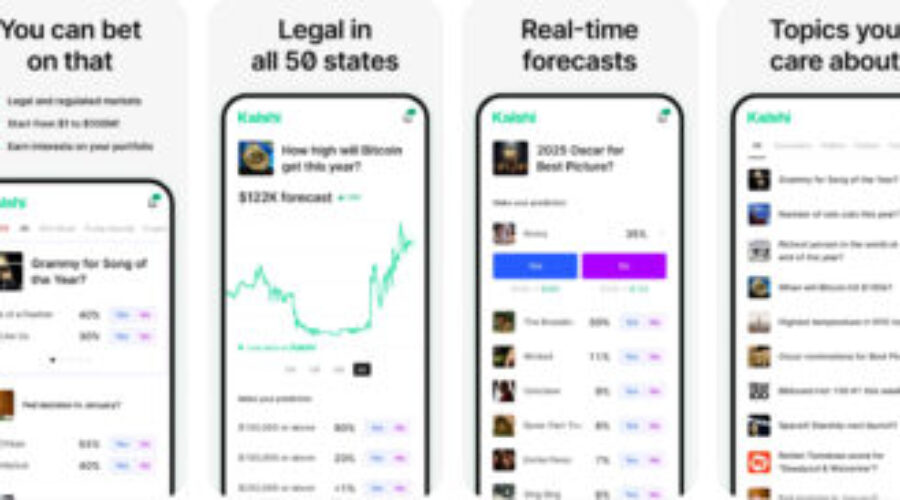
Will Nevada Ever Legalize Prediction Markets Like Kalshi?
Will Nevada Ever Legalize Prediction Markets Like Kalshi?
Nevada, the glittering oasis of chance and fortune, has long been the epicenter of gambling innovation. Yet, as prediction markets like Kalshi gain traction across the globe, one must wonder: will the Silver State ever embrace this new frontier of speculative wagering? The answer isn’t as simple as a coin flip—it’s a high-stakes game of regulatory chess, where tradition clashes with innovation.
The Allure of Prediction Markets
Prediction markets, where participants bet on the outcomes of future events—from elections to sports to economic trends—offer a tantalizing blend of entertainment and insight. Platforms like Kalshi have turned prognostication into a legitimate, if niche, industry. But Nevada’s gambling legacy, built on casinos and sportsbooks, presents a unique paradox. The state thrives on risk, yet its regulatory framework is notoriously rigid. Could prediction markets ever find a home in a land where even the most mundane bets are scrutinized?
The Regulatory Hurdle: Tradition vs. Innovation
Nevada’s gaming laws are a labyrinth of historical precedent and cautious conservatism. The Nevada Gaming Control Board and the Gaming Commission operate with a laser focus on maintaining the integrity of traditional gambling. Prediction markets, by their very nature, challenge this status quo. They don’t fit neatly into the categories of sports betting or casino games—they’re a hybrid, a financial instrument masquerading as a bet. This ambiguity is a red flag for regulators who prize clarity above all else. The question isn’t just whether Nevada will legalize them, but whether it can afford to ignore them.
The Political Chessboard
Legalization isn’t just a regulatory issue; it’s a political one. Nevada’s legislature is a delicate balance of industry stakeholders, consumer advocates, and lawmakers wary of upsetting the status quo. Lobbyists for traditional gaming interests may see prediction markets as a threat, while fintech innovators could push for their inclusion. The path forward would require a coalition of unlikely allies—tech entrepreneurs, free-market advocates, and even some forward-thinking regulators. Yet, in a state where gambling is woven into the political fabric, such a coalition remains a distant mirage.
The Public Perception Paradox
Even if the politics align, public opinion could be the final stumbling block. Nevada’s identity is tied to its casinos, its neon-lit temples of chance. Prediction markets, though intellectually stimulating, lack the visceral thrill of a slot machine or the communal energy of a poker table. Would the average Nevadan embrace them, or would they be seen as a gimmick? The answer may lie in how these markets are marketed—not as financial tools, but as a new form of entertainment, a cerebral gamble where the stakes are ideas, not just dollars.
A Glimpse into the Future
If Nevada were to legalize prediction markets, it wouldn’t happen overnight. The process would likely begin with a pilot program, a carefully controlled experiment to gauge public and regulatory appetite. Kalshi’s model—transparent, regulated, and user-friendly—could serve as a blueprint. But the real challenge would be convincing Nevada’s gaming establishment that prediction markets aren’t a Trojan horse, but a complementary addition to its already diverse portfolio of wagers. The state has always been a pioneer; the question is whether it’s ready to bet on a new kind of gamble.
The road to legalization is fraught with uncertainty, but Nevada has never shied away from a challenge. If the stars align—regulatory flexibility, political will, and public curiosity—the Silver State could once again redefine what it means to gamble. Until then, the question lingers, suspended in the desert air like the faint hum of a slot machine in the distance: Will Nevada ever take the plunge?