Elon Musk’s Vegas Loop to Swallow the Las Vegas Monorail: What We Know
The Las Vegas Strip has long been a canvas for audacious innovation, where neon dreams collide with steel and concrete. Yet, beneath the glittering facade of casinos and entertainment, a quieter revolution has been unfolding—one that threatens to eclipse even the most ambitious of predecessors. Enter Elon Musk’s Vegas Loop, a subterranean transit marvel poised to devour the legacy of the Las Vegas Monorail. What began as a speculative whisper has now crescendoed into a seismic shift, leaving observers to ponder: Is this the future of urban mobility, or merely another Muskian gambit to redefine the city’s infrastructure? The answer lies not just in steel and speed, but in the deeper currents of ambition, economics, and the relentless pursuit of progress.
The Rise of the Vegas Loop: A Subterranean Revolution
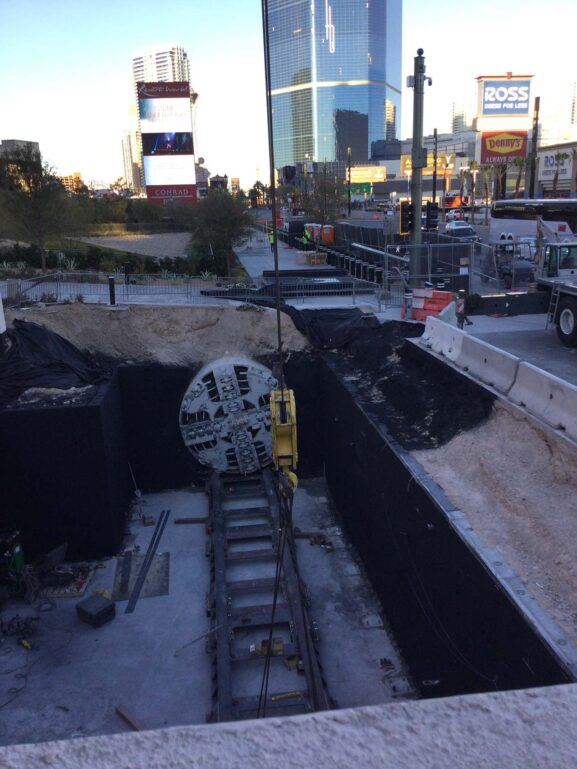
Unlike its elevated cousin, the Las Vegas Monorail, which glides above the Strip’s cacophony, the Vegas Loop burrows beneath it—silent, swift, and unobtrusive. This 2.2-mile subterranean tunnel, part of Musk’s Boring Company’s portfolio, is designed to ferry passengers in autonomous Tesla pods at speeds up to 150 mph, reducing transit times between key destinations to mere minutes. The contrast is stark: where the Monorail’s sleek, elevated tracks are a visual spectacle, the Loop operates in stealth mode, a subterranean artery pulsing beneath the city’s veins. Its appeal isn’t just in speed, but in its promise to untangle the Strip’s legendary congestion without marring its iconic skyline.
Why the Monorail’s Legacy is in the Crosshairs
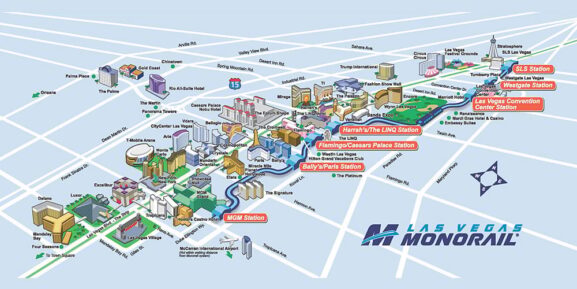
The Las Vegas Monorail, once a symbol of forward-thinking urban planning, now faces an existential threat. Despite its efficiency, it has struggled with low ridership and high operational costs, a victim of its own rigid structure. The Loop, by contrast, offers flexibility—expandable tunnels, modular stations, and the potential for on-demand service. Where the Monorail’s fixed route limits its utility, the Loop’s adaptability could redefine how Las Vegas moves. Critics argue that the Monorail’s decline was inevitable, a relic of an era when transit solutions were less dynamic. The Loop, they suggest, is not just an upgrade—it’s a coup.
The Economics of Ambition: Who Really Benefits?
Behind the engineering marvels and futuristic promises lies a question of economics. The Vegas Loop’s business model hinges on high-volume, high-margin operations, with fares potentially dwarfing those of traditional transit systems. Yet, questions linger: Will the Loop cannibalize existing transit options, or will it create a new tier of premium mobility? The Monorail, subsidized and public, served as a democratic transit option. The Loop, if priced as a luxury service, could exacerbate inequality, turning mobility into a commodity rather than a right. The deeper fascination isn’t just in the technology, but in the societal trade-offs it demands.
Public Perception: From Skepticism to Fascination
Public reaction to the Vegas Loop has been a rollercoaster of skepticism and awe. Early detractors dismissed it as a vanity project, a Muskian folly with little regard for practicality. Yet, as the project materialized, so did the intrigue. The allure of a transit system that moves faster than a sports car, yet operates underground like a silent specter, has captivated imaginations. The Monorail, for all its charm, was a relic of a different era—one where transit was about spectacle, not efficiency. The Loop, in contrast, whispers of a future where technology and urban living merge seamlessly, even if the cost remains unclear.
The Broader Implications: A Blueprint for Other Cities?
If the Vegas Loop succeeds, it could become a blueprint for other cities grappling with congestion and transit woes. Its modular design allows for rapid expansion, and its autonomous operation reduces labor costs—a tantalizing prospect for municipalities desperate for solutions. Yet, the risks are equally monumental. The Monorail’s struggles serve as a cautionary tale: even the most innovative solutions can falter if they fail to align with the needs of their users. The Loop’s success hinges not just on its engineering, but on its ability to integrate with the city’s existing fabric—something that remains unproven.
The Las Vegas Monorail, once a beacon of urban innovation, now stands at the precipice of obsolescence. Its fate is a reminder that progress is not a straight line, but a series of collisions—between old and new, between vision and reality. The Vegas Loop, with its subterranean speed and silent efficiency, is more than just a transit system; it’s a statement. Whether it will swallow the Monorail whole or merely coexist remains to be seen. But one thing is certain: in the city that never sleeps, even its transit systems are destined for reinvention.