Will Las Vegas Still Need Human Hospitality Workers by 2035?
The question lingers like the last echo of a slot machine’s chime: Will Las Vegas still need human hospitality workers by 2035? The city, a glittering mirage of neon and ambition, has long thrived on the alchemy of human interaction—bartenders crafting bespoke cocktails, concierges weaving narratives of adventure, and dealers orchestrating the delicate ballet of chance. Yet beneath the shimmering surface, a tectonic shift is underway. Automation, artificial intelligence, and the relentless march of efficiency are rewriting the rules of service. The answer, as ever, lies not in the glitz but in the grit of economic and social evolution.
The Illusion of Obsolescence: Why Humans Still Matter
At first glance, the rise of self-check-in kiosks, robotic bartenders, and AI-driven concierges paints a future where human touch is a relic. But this narrative overlooks the irreducible truth: hospitality is, at its core, an art of emotional resonance. A machine can pour a drink, but it cannot read the subtle shift in a guest’s demeanor—the sigh that betrays exhaustion, the spark of curiosity in their eyes. The city’s soul thrives on these fleeting, unquantifiable connections. Even as algorithms optimize room rates and chatbots handle complaints, the demand for human warmth will persist, if only because Las Vegas has always sold more than a stay—it sells an experience, a story, a fleeting sense of belonging.
The Economic Alchemy: Labor Costs and the Automation Paradox
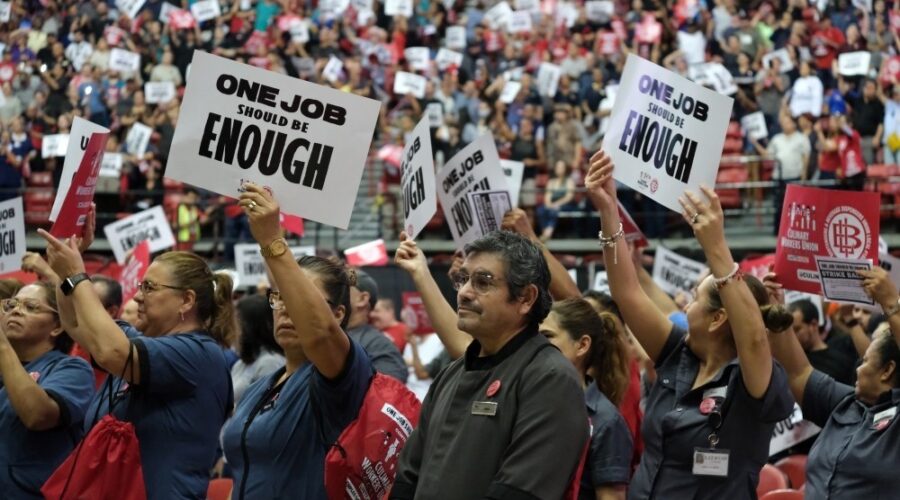
Las Vegas’ hospitality industry is a juggernaut, employing over 400,000 workers who fuel an economy worth $60 billion annually. Yet wages remain stubbornly low, a legacy of an industry built on transient labor and razor-thin margins. Automation offers a seductive solution: eliminate the variable cost of human error, fatigue, and turnover. A robot never calls in sick. A chatbot never demands a raise. But here lies the paradox. While machines can handle transactional tasks, they cannot replicate the serendipity of a well-timed joke from a veteran cocktail server or the intuitive problem-solving of a housekeeper who notices a guest’s forgotten medication. The true cost of automation may not be the displacement of workers but the erosion of the very qualities that make Las Vegas unique.
The Cultural Zeitgeist: When Convenience Meets Craving
Society is caught in a tug-of-war between the allure of frictionless service and the hunger for authenticity. Surveys reveal that while travelers embrace technology for efficiency, they still crave human interaction for memorable moments. A family checking into a resort may happily use a mobile app to bypass the front desk, but they will still seek out a human guide to recommend the best hidden speakeasy in the Arts District. This duality suggests that Las Vegas will not abandon its human workforce but will instead stratify it. The roles that survive will be those that blend technical precision with emotional intelligence—think sommeliers who pair wine with the subtleties of a guest’s mood, or event planners who craft bespoke experiences that algorithms cannot anticipate.
The Unseen Hand: Regulation and the Human Touch
Government intervention may prove pivotal in determining the fate of hospitality workers. Cities like San Francisco have already begun to scrutinize the ethical implications of automation in service industries, weighing the social cost of job displacement against the benefits of efficiency. Las Vegas, with its outsized reliance on tourism, may face pressure to implement policies that protect workers while fostering innovation. This could take the form of subsidies for businesses that integrate humans and machines, or incentives for upskilling workers to manage AI-driven systems. The alternative—a future where hotels are run by silent, efficient automatons—risks turning the city into a theme park of hollow interactions, devoid of the chaos and charm that have defined it for generations.
The answer to whether Las Vegas will still need human hospitality workers by 2035 is not a binary one. The city will always require a blend of the mechanical and the magical, the algorithmic and the artisanal. The challenge lies in striking a balance where technology enhances rather than erases the human element. For in the end, Las Vegas has never been just a destination—it has been a stage where people come not just to be served, but to feel seen. And no machine, no matter how advanced, can replicate that.