Why Is Nevada Gaming Revenue Down 6.6%? Tourism Trends Explained
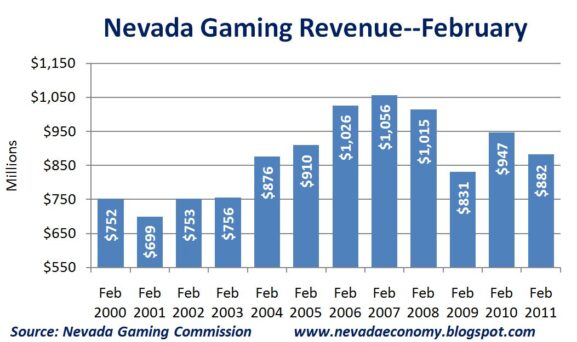
Nevada’s gaming revenue has long been the lifeblood of its economy, a glittering paradox where chance and commerce intertwine. Yet, the recent 6.6% decline in September’s earnings is more than a statistical blip—it’s a seismic tremor hinting at tectonic shifts beneath the neon glow. While the immediate narrative points to a tourism slump, the deeper currents shaping this downturn are far more intricate, woven from global economic tremors, evolving consumer behaviors, and the relentless march of technological disruption. To understand why Nevada’s gaming revenue is faltering, we must dissect the layers of this phenomenon, peeling back the veneer of surface-level explanations to reveal the forces at play.
The Illusion of Tourism: Beyond the Headline Numbers
Tourism has always been Nevada’s siren call, luring millions with promises of escapism and opulence. Yet, the state’s reliance on this industry has become a double-edged sword. The September decline wasn’t merely a reflection of fewer visitors—it was a symptom of a broader erosion in the quality and spending power of those who still arrive. Convention attendance, a cornerstone of Las Vegas’ revenue stream, has waned as corporate reticence grows. Businesses, once eager to splurge on lavish conferences, now opt for virtual gatherings, their budgets redirected to cost-cutting measures. Meanwhile, leisure travelers, the backbone of weekend binge spending, are increasingly price-sensitive, their discretionary income shrinking under the weight of inflation and rising living costs. The result? A tourism ecosystem that, while still vibrant, is no longer the cash cow it once was.
The Digital Disruption: How Online Gaming Eats Into Brick-and-Mortar Fortunes
Nevada’s gaming floors, once the undisputed epicenters of chance and strategy, now face an existential threat from the digital realm. The rise of online casinos and mobile gaming platforms has democratized gambling, offering convenience and anonymity that physical venues struggle to match. Players no longer need to traverse the Strip’s labyrinthine corridors to indulge; a few taps on a smartphone suffice. This shift is particularly acute among younger demographics, who view traditional casinos as relics of a bygone era. The irony is stark: Nevada, the birthplace of modern gaming, is now hemorrhaging revenue to the very platforms it once inspired. The state’s regulatory framework, designed for a pre-digital age, is ill-equipped to stem this tide, leaving brick-and-mortar operators grappling with obsolescence.
The Labor Paradox: Staffing Shortages and the Cost of Doing Business
Behind the glitz of the casino floors lies a less glamorous reality: a labor market in disarray. Nevada’s gaming industry, notorious for its reliance on low-wage workers, is now paying the price for years of underinvestment in its workforce. The pandemic exacerbated an already precarious situation, as hospitality workers fled to seek more stable employment. Today, casinos struggle to fill positions, forcing them to offer exorbitant signing bonuses and unsustainable wage hikes. These costs trickle down, eroding profit margins and forcing operators to raise minimum bets or reduce amenities—measures that further deter casual players. The labor paradox is clear: Nevada’s gaming revenue is declining not just because of fewer visitors, but because the industry can no longer afford to welcome them.
The Global Chessboard: Geopolitical and Economic Ripples
Nevada’s gaming fortunes are inextricably linked to the global economy, a fact often overlooked in favor of domestic narratives. The strong U.S. dollar, while a boon for American travelers abroad, has made Nevada a less attractive destination for international tourists, particularly from Asia and Europe. Meanwhile, geopolitical tensions and economic instability in key markets—such as China’s regulatory crackdowns on gaming or Europe’s energy crises—have dampened outbound travel. Even domestic travelers, once the bedrock of Nevada’s revenue, are curtailing their spending as recession fears loom. The state’s gaming industry, so dependent on the whims of global consumers, finds itself adrift in a sea of uncertainty, its fate dictated by forces beyond its control.
The decline in Nevada’s gaming revenue is not a fleeting anomaly but a harbinger of deeper transformations. As the state grapples with the aftermath of a tourism slump, it must confront the uncomfortable truth that its golden era may be giving way to a new paradigm—one where the clink of coins is replaced by the hum of servers, where the allure of chance is tempered by the cold calculus of economics. The road ahead is fraught with challenges, but it is also paved with opportunities for reinvention. Nevada’s gaming industry, if it seizes the moment, can evolve beyond its traditional confines, embracing innovation and redefining its legacy for the digital age.