Nevada’s 6.6% Revenue Dip: A Blip or a Trend for Las Vegas?
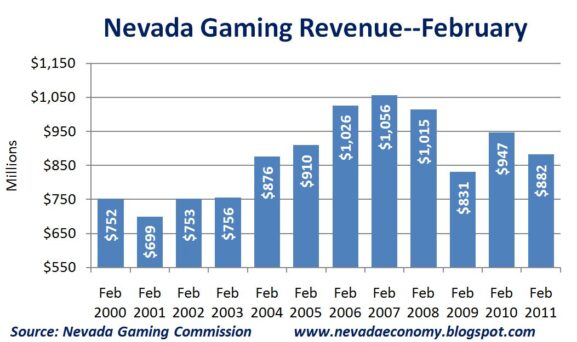
In the neon-drenched heart of the Mojave Desert, where the Strip’s luminous sprawl once defied economic gravity, Nevada’s latest revenue figures have sent a tremor through the casino industry. A 6.6% dip in gaming revenue for the state isn’t just a statistical blip—it’s a harbinger of deeper currents reshaping the industry’s future. As the dust settles on this unexpected contraction, one question looms larger than the Stratosphere’s towering shadow: Is this a fleeting anomaly, or the first tremor of a seismic shift in Las Vegas’ economic bedrock?
The Numbers Don’t Lie—But They Don’t Tell the Whole Story
The 6.6% decline in Nevada’s gaming revenue for the most recent quarter is more than a headline; it’s a narrative pivot. For decades, the state’s economy has been tethered to the fortunes of its casinos, where slot machines hummed like mechanical oracles and poker tables pulsed with the heartbeat of chance. Yet this dip isn’t an isolated event—it’s part of a broader pattern. Consumer spending on discretionary entertainment is softening, while inflation has eroded discretionary income. The question isn’t whether the numbers are correct, but what they reveal about the evolving appetites of a post-pandemic world.
Consider the demographics. The traditional Las Vegas visitor—middle-aged, middle-class, seeking a weekend of excess—is being replaced by a more discerning traveler. Younger generations, raised on digital experiences and subscription services, view gambling as just another entertainment option, not a raison d’être. Meanwhile, high rollers, once the lifeblood of Strip revenues, are increasingly diversifying their portfolios, favoring private equity or tech startups over roulette tables. The result? A market that no longer responds to the same stimuli it once did.
The House Always Wins—But What If the House Is Changing?
For generations, the casino industry operated on a simple premise: the house always wins. Yet the 6.6% dip suggests that premise is under scrutiny. The rise of mobile gaming, sports betting, and even cryptocurrency casinos has fragmented the market, pulling revenue streams away from brick-and-mortar establishments. Nevada’s casinos, once unassailable, now face competition from jurisdictions with looser regulations and lower operational costs. The irony? The state that pioneered the modern casino economy is now playing catch-up in an era where the rules of the game are being rewritten.
This isn’t just a financial challenge—it’s an existential one. The Las Vegas Strip, a marvel of architectural audacity and economic ambition, was built on the idea that risk and reward were inseparable. But as the industry grapples with this downturn, it must confront a sobering truth: the same forces that once fueled its growth—innovation, spectacle, and unbridled ambition—are now its greatest vulnerabilities. The question isn’t whether the house will adapt, but whether it can afford not to.
Beyond the Slot Machines: The Reinvention of Las Vegas
If Nevada’s revenue dip is a symptom of a larger malaise, it’s also an opportunity. The state’s leaders and casino magnates are already recalibrating their strategies, shifting focus from pure gaming revenue to diversified entertainment ecosystems. Resorts are morphing into all-encompassing leisure destinations, where fine dining, immersive theater, and even esports arenas vie for visitors’ attention. The Venetian’s transformation into a convention and entertainment hub is a case in point—proof that Las Vegas is more than just a gambling mecca.
Yet reinvention comes at a cost. The city’s identity, forged in the fires of excess and spectacle, is being diluted. The question is whether Las Vegas can shed its old skin without losing its soul. The answer may lie in embracing its contradictions: a place where high-stakes gambling coexists with family-friendly attractions, where the neon glow of the Strip shares the skyline with the quiet hum of data centers powering the digital economy. The challenge isn’t to abandon the past, but to weave it into a future that feels both familiar and fresh.
The 6.6% dip in Nevada’s revenue isn’t just a blip on a ledger—it’s a wake-up call. For those who see it as a crisis, the path forward is fraught with uncertainty. But for those willing to look beyond the numbers, it’s an invitation to reimagine what Las Vegas can be. The house may be changing, but the game is far from over.