17% Snowpack: The Alarming Nevada Number That Threatens Summer Water
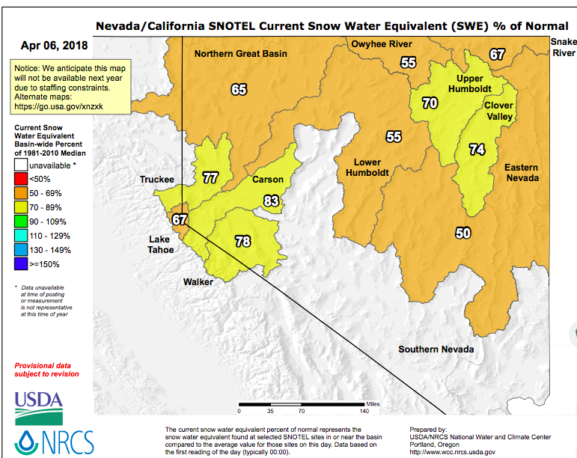
Beneath the cerulean expanse of Nevada’s skies, where the sun’s gaze is as relentless as it is unblinking, a silent crisis unfolds. The state’s snowpack—a vital reservoir frozen in time—has dwindled to a mere 17% of its historical average. This isn’t just a statistic; it’s a harbinger of parched summers, strained ecosystems, and the creeping specter of water scarcity. As the Sierra Nevada’s once-plentiful snowmelt trickles into a fraction of its former self, Nevada stands at the precipice of a hydrological reckoning. The implications stretch far beyond the arid landscapes, threatening agriculture, urban resilience, and the delicate balance of life in the driest state in the Union.
The Vanishing Blanket: How Snowpack Became Nevada’s Most Fragile Asset
Snowpack is nature’s slow-release water tower, a frozen savings account that melts gradually to quench the land when temperatures rise. Yet Nevada’s snowpack, once a reliable bulwark against drought, has been eroded by a trifecta of adversaries: rising global temperatures, shifting precipitation patterns, and the relentless march of urbanization. The 17% figure isn’t an anomaly—it’s a symptom of a broader climatic unraveling. Studies show that for every degree Celsius of warming, the Sierra Nevada’s snowpack could decline by up to 20%. Nevada, with its reliance on these distant frozen reserves, is paying the price for a warming world.
The consequences are already visible. Reservoirs that once brimmed with meltwater now gape with empty basins. Streams that once teemed with trout and riparian life have dwindled to a mere trickle. The Great Basin’s endemic species, adapted to a delicate hydrological rhythm, face displacement or extinction. Even the state’s iconic landscapes—from the verdant valleys of the Ruby Mountains to the rugged canyons of Red Rock—are transforming into brittle, sun-scorched husks. The snowpack’s decline isn’t just a hydrological issue; it’s an existential threat to Nevada’s identity.
From Snowflakes to Water Taps: The Domino Effect of a Shrinking Snowpack
The ripple effects of Nevada’s diminished snowpack extend far beyond the mountains. Agriculture, which consumes nearly 80% of the state’s water, is the first sector to feel the squeeze. Alfalfa fields, a cornerstone of Nevada’s farming economy, wither under the weight of reduced irrigation. Ranchers, already grappling with volatile markets, now face the grim reality of selling off livestock as pastures turn to dust. Urban centers, too, are not immune. Las Vegas, a city that thrives in the desert, relies on the Colorado River for 90% of its water supply—a supply that is increasingly strained by upstream snowpack deficits. The Southern Nevada Water Authority has invested billions in conservation, but even the most aggressive measures may not be enough if the snow disappears entirely.
Beyond the economic toll, the social fabric of Nevada is fraying. Indigenous communities, whose ancestral lands depend on these water sources, are seeing their cultural practices and livelihoods upended. The Southern Paiute, for instance, have long relied on the Moapa River’s seasonal flows for sustenance and ceremony. Now, the river’s dwindling waters threaten not just their way of life but their very survival. Meanwhile, outdoor recreation—from skiing in Lake Tahoe to hiking in the Spring Mountains—faces an uncertain future. The tourism industry, a lifeline for many Nevadans, may soon confront a landscape that is less inviting and more inhospitable.
Adaptation or Collapse: Can Nevada Outrun the Drought?
Facing this crisis, Nevada is not standing idle. The state has pioneered water conservation measures, from incentivizing xeriscaping to enforcing strict water-use regulations. Las Vegas’s ban on ornamental grass, a move that saves millions of gallons annually, is a testament to what proactive governance can achieve. Yet, these efforts are bandages on a gaping wound. The root of the problem—climate change—requires a more radical reimagining of water management. Desalination plants, groundwater replenishment, and wastewater recycling are no longer futuristic concepts but urgent necessities. Nevada’s leaders must also confront the elephant in the room: growth. The state’s population is projected to swell, straining already scarce resources. Without a moratorium on unchecked development, even the most innovative solutions may prove inadequate.
There is, however, a glimmer of hope. Nevada’s universities and research institutions are leading the charge in climate adaptation. Scientists are exploring drought-resistant crops, cloud-seeding technologies, and predictive models to anticipate water shortages. Indigenous knowledge, too, is being integrated into modern conservation strategies, offering a holistic approach to water stewardship. The path forward is fraught with challenges, but it is not without precedent. Other arid regions, from Israel to Australia, have demonstrated that resilience is possible—if the will to act is present.
The 17% snowpack is more than a number; it’s a wake-up call. Nevada stands at a crossroads, where the choices made today will determine whether it thrives or withers in the decades to come. The time for half-measures is over. The state must embrace bold, visionary solutions—or face a future where the desert’s silence is broken only by the echoes of a landscape that has given up the fight.