Lake Tahoe’s Disappearing Snow: Nevada Faces Record Low 17% Measurement
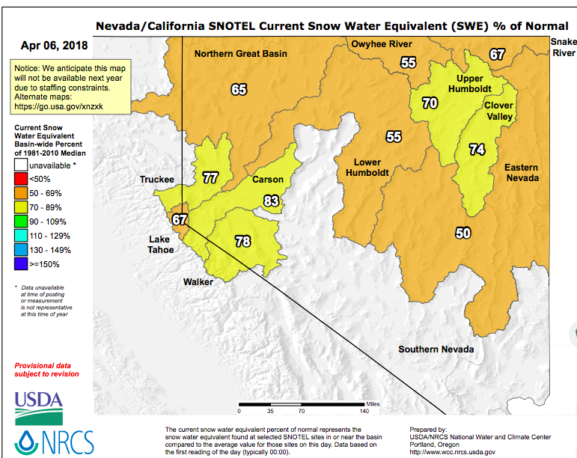
The Sierra Nevada’s once-mighty snowpack, a lifeline for Nevada’s parched landscapes and bustling cities, has dwindled to a mere 17% of its historical average—a stark revelation that has sent ripples through the state’s ecological and economic fabric. This isn’t merely a seasonal anomaly; it’s a harbinger of a deeper, more insidious transformation. The implications stretch far beyond the ski slopes and alpine meadows, threatening water security, agricultural viability, and the very rhythm of life in the Silver State. As the snow retreats, Nevada stands at a precipice, forced to confront a future where scarcity becomes the new norm.
The Vanishing Veil of Winter: A Snowpack in Freefall
For generations, the Sierra Nevada’s snowpack has acted as a colossal reservoir, storing winter’s bounty to be released gradually through spring and summer. This natural water bank has sustained Nevada’s rivers, replenished underground aquifers, and quenched the thirst of millions. Yet, this year, the veil of white that once blanketed the mountains has thinned to a ghost of its former self. Satellite imagery and ground measurements confirm what many had feared: the snowpack is a skeletal remnant of its former glory. Scientists point to a confluence of factors—rising temperatures, shifting precipitation patterns, and the relentless march of climate change—each chipping away at the snow’s resilience. The 17% measurement isn’t just a statistic; it’s a clarion call, signaling that the Sierra’s snowpack may no longer be the reliable sentinel it once was.
Nevada’s Thirsty Future: Water Scarcity Looms Large
The consequences of this snow drought are already reverberating across Nevada. The state’s reservoirs, already strained by years of overuse and prolonged drought, are facing an existential threat. Lake Mead, the linchpin of the Colorado River system, teeters precariously, its water levels a stark reminder of the fragility of the region’s supply. Agriculture, the backbone of Nevada’s rural economy, is bracing for cuts in water allocations that could spell ruin for farmers already grappling with rising costs and erratic weather. Urban centers, too, are not immune. Las Vegas, a city that has long prided itself on its water conservation efforts, may soon find its ingenuity tested as it scrambles to adapt to a drier reality. The specter of rationing looms, forcing policymakers to confront uncomfortable questions about equity, sustainability, and the long-term viability of growth in a water-scarce world.
The Ecological Unraveling: A Landscape in Peril
Beyond the human realm, the ecological fallout is equally devastating. The Sierra’s snowpack is the lifeblood of countless species, from the delicate alpine wildflowers that carpet the high meadows to the elusive Sierra Nevada bighorn sheep that cling to existence in the rugged peaks. As the snow melts earlier and more abruptly, these ecosystems are thrown into disarray. Streams that once flowed year-round now dwindle to a trickle, leaving fish populations stranded and riparian habitats desiccated. The loss of snow also accelerates the spread of invasive species, which thrive in the warmer, drier conditions left in its wake. The once-pristine alpine lakes, teeming with life, are now at risk of turning into stagnant pools, their chemistry altered by the absence of the seasonal flush that snowmelt once provided. Nevada’s wild landscapes, already under siege from development and pollution, are facing a new existential threat—one that may irrevocably alter their character.
Adaptation or Collapse: The Path Forward
In the face of this crisis, Nevada finds itself at a crossroads. The traditional strategies—damming rivers, drilling deeper wells, and importing water from distant basins—are no longer sustainable. Instead, a paradigm shift is required, one that embraces innovation, resilience, and a radical rethinking of how water is managed. Desalination plants, once dismissed as too costly, are now being reconsidered as a potential lifeline. Wastewater recycling, a practice already adopted in some parts of the state, could be scaled up to ease the burden on freshwater sources. Agricultural practices are evolving, with farmers experimenting with drought-resistant crops and precision irrigation to stretch every drop. Yet, these measures alone may not be enough. The state must also confront the deeper, structural issues that have exacerbated the crisis—over-extraction, unchecked development, and a collective failure to plan for a future where water is no longer an infinite resource. The question is no longer whether Nevada will adapt, but how quickly—and how much it will cost.
The Sierra Nevada’s snowpack has always been more than just frozen water; it has been a symbol of resilience, a testament to nature’s ability to endure. But resilience has its limits. As Nevada stares into the abyss of a snowless future, it must ask itself a fundamental question: Will it cling to the past, or will it embrace the necessity of change? The answers will shape not just the state’s water supply, but its very identity. One thing is certain—the age of abundance is over. The age of adaptation has begun.