Nevada Environment Update: Snowpack Crash Forces Summer Water Planning
As the desert sun bakes the parched earth of Nevada, a once-reliable winter ritual has faltered this year. The state’s snowpack, that glittering crown of winter’s bounty, has melted away faster than a mirage in the Mojave. What does this mean for the arid landscapes and thirsty communities that depend on its slow-release hydration? The answer isn’t just a trickle—it’s a full-blown challenge to the rhythm of life in the Silver State.
Where Did All the Snow Go? The Great Snowpack Vanishing Act
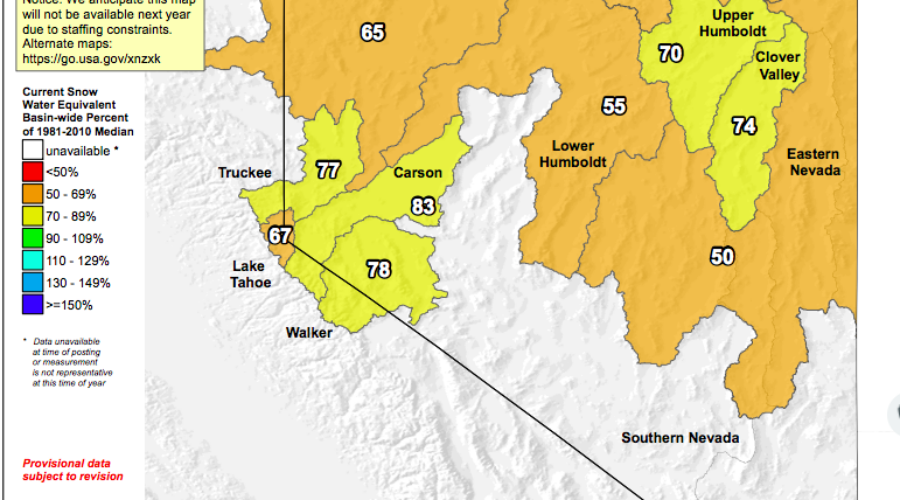
Nevada’s snowpack isn’t just a scenic backdrop for ski resorts; it’s the lifeblood of the state’s water supply. This year, however, the mountains have yielded less than expected, leaving hydrologists scratching their heads. Was it the unseasonably warm March winds? A premature thaw that outpaced nature’s usual tempo? Or perhaps a sign of a deeper shift in the climate’s unpredictable dance? Whatever the cause, the result is clear: the snowpack’s early retreat leaves reservoirs with less cushion for the scorching summer ahead.
From Melting Peaks to Parched Valleys: The Domino Effect
The consequences ripple far beyond the ski slopes. Agriculture, already a high-stakes gamble in Nevada’s arid climate, faces tighter water quotas. Municipalities brace for potential shortages, while ecosystems teeter on the edge of stress. The Truckee River, a vital artery for Reno and Sparks, may see reduced flows, threatening both human needs and aquatic habitats. Even the mighty Lake Tahoe, a jewel of the Sierra Nevada, could feel the squeeze. How will Nevada adapt when the snowpack’s generosity wanes?
Planning for the Unpredictable: A Summer of Water Math
With the snowpack’s early melt, water managers are playing a high-stakes game of chess against time. Conservation measures, from stricter irrigation rules to public awareness campaigns, are likely to ramp up. Could Nevada’s cities become pioneers in drought-resistant landscaping? Will farmers pivot to crops that demand less water? The state’s resilience will hinge on its ability to innovate before the taps run lower than expected. Every drop saved now could mean the difference between a manageable summer and a crisis.
Lessons from the Past: Can Nevada Outsmart the Drought?
History offers a mixed bag of lessons. Nevada has weathered droughts before, but this year’s snowpack crash feels different—more abrupt, more urgent. The state’s reliance on the Colorado River, already under strain, adds another layer of complexity. Will this be the wake-up call that spurs long-term investments in water recycling, groundwater recharge, or even cloud-seeding experiments? Or will the challenge expose vulnerabilities that demand immediate, if painful, adjustments?
The desert doesn’t forgive poor planning. As Nevada stares down a summer of water uncertainty, one thing is certain: the state’s ability to adapt will define its future. Whether through ingenuity or necessity, the lessons learned this year could shape Nevada’s relationship with water for decades to come. The question isn’t just how much snow fell this winter—it’s how well the state prepares for the dry days ahead.