Nevada Water Conservation Urged as Snowpack Hits 17% of Median
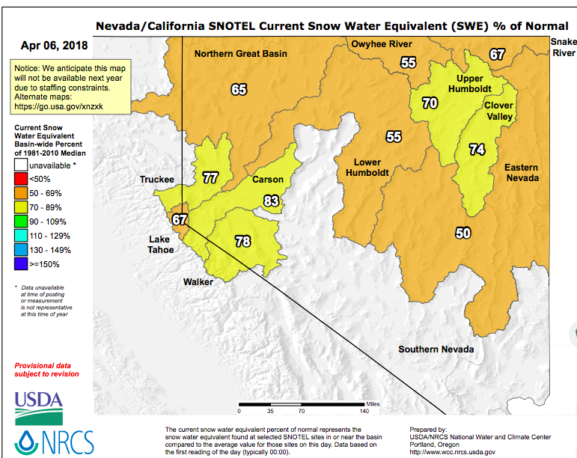
In the arid expanse of the American West, where water is the lifeblood of civilization, Nevada finds itself at a precipice. The once-reliable snowpack, a natural reservoir frozen in time atop the Sierra Nevada, has dwindled to a mere 17% of its median levels. This stark revelation isn’t just a statistic—it’s a clarion call, a silent scream from the mountains that demands immediate attention. As the state braces for a future where every drop counts, the urgency of water conservation has never been more palpable. The question isn’t whether Nevada will adapt, but how swiftly it can pivot from complacency to action.
The Vanishing Snow: A Harbinger of Scarcity
The Sierra Nevada’s snowpack has long been the cornerstone of Nevada’s water supply, a seasonal gift that replenishes reservoirs and sustains ecosystems. Yet, this year, the mountains stand nearly bare, their once-thick blankets of snow reduced to skeletal remnants. The 17% median figure isn’t just a number—it’s a symptom of a larger climatic shift, a canary in the coal mine for a state that thrives on borrowed water. The implications are dire: reduced snowmelt means lower river flows, depleted aquifers, and a fragile balance tipped toward scarcity. For a region where water rights are as contentious as they are sacred, this is a wake-up call that cannot be ignored.
Urban and Rural: A Shared Struggle
The impact of this snowpack deficit isn’t confined to the high country. Cities like Las Vegas and Reno, with their glittering fountains and manicured lawns, are suddenly facing an existential question: How do we sustain growth when the well is running dry? Meanwhile, rural communities, already grappling with the slow creep of desertification, see their livelihoods hanging by a thread. Agriculture, the backbone of Nevada’s economy, faces a reckoning as irrigation rights become a battleground. The divide between urban demand and rural necessity has never been more pronounced, yet the solution must be collective. Conservation isn’t a luxury—it’s a necessity that binds every resident, every business, every stakeholder in the state’s future.
Innovation as the New Frontier
If necessity is the mother of invention, Nevada is poised to become a laboratory of water-wise ingenuity. The state has long been a pioneer in conservation, from the drip irrigation systems of its vineyards to the recycled water pipelines of its cities. Now, the challenge is to scale these efforts exponentially. Desalination plants, though energy-intensive, could tap into the boundless reserves of the Pacific. Advanced metering infrastructure could curb waste by giving residents real-time insights into their usage. Even the humble lawn, a symbol of suburban prosperity, is under scrutiny as water districts incentivize xeriscaping and native landscaping. The message is clear: the future of Nevada’s water supply will be written not in the snow-capped peaks of the Sierra, but in the laboratories, boardrooms, and backyards of its people.
The Psychological Shift: From Abundance to Scarcity
Perhaps the most profound challenge isn’t technological or logistical—it’s psychological. Nevada, like much of the West, has long operated under the illusion of abundance, a mindset forged in an era when water seemed infinite. But the vanishing snowpack has shattered that illusion, forcing a reckoning with reality. The shift from complacency to conservation requires more than policy changes; it demands a cultural transformation. Residents must see themselves not as consumers of water, but as stewards of a finite resource. Businesses must rethink growth models that rely on unsustainable extraction. And policymakers must craft incentives that reward frugality over excess. This isn’t just about saving water—it’s about redefining what it means to live in a desert state.
A Call to Action: Every Drop Counts
The path forward is fraught with challenges, but it’s not without hope. Nevada has weathered droughts before, and each time, it has emerged more resilient, more innovative. The difference this time is the scale of the crisis—and the urgency of the response. Conservation efforts must be swift, decisive, and inclusive. Every resident, from the rancher in Elko to the homeowner in Henderson, has a role to play. Utilities must invest in infrastructure that minimizes waste. Farmers must adopt precision irrigation techniques that maximize every gallon. And policymakers must strike a balance between short-term needs and long-term sustainability. The snowpack may be shrinking, but Nevada’s capacity for adaptation is not.
The mountains may be silent, but their message is clear: the time for action is now. The state that once gambled on endless growth must now wager on conservation. The stakes couldn’t be higher, but neither could the potential rewards—a future where Nevada not only survives but thrives, where every drop is cherished, and where the lessons of scarcity become the blueprint for resilience. The snow may be gone, but the spirit of innovation remains, a beacon guiding the way forward.