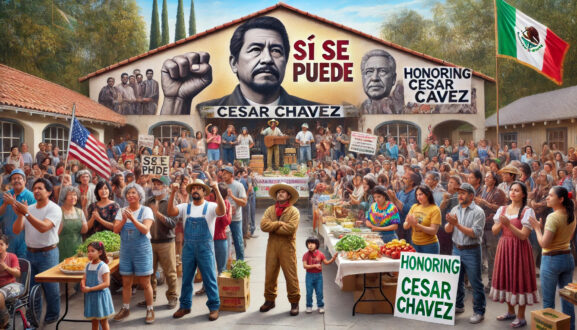
Breaking: Nevada Lawmakers Open Review of Cesar Chavez Day Holiday
Could Nevada’s sun-kissed skies soon be graced by an unexpected holiday? A playful breeze of legislative curiosity is sweeping through Carson City, where lawmakers have quietly opened a review of Cesar Chavez Day—a day of remembrance that, for some, still lingers in the realm of the unmarked on Nevada’s calendar. As the Golden State honors the labor icon with a paid day off, Nevada now stands at a crossroads: to embrace the legacy of a civil rights titan or to grapple with the practicalities of weaving another holiday into the state’s already intricate tapestry of observances. What might this mean for businesses, schools, and the rhythm of life across the Silver State?
The Legislative Spark: Why Now?
The decision to revisit Cesar Chavez Day didn’t emerge from thin air. Advocacy groups, fueled by a growing recognition of Chavez’s contributions to labor rights and social justice, have amplified their calls for recognition. Nevada’s legislative session, often a whirlwind of policy debates and fiscal negotiations, has become an unlikely stage for this reconsideration. Lawmakers are now tasked with sifting through the potential ripple effects—both symbolic and practical—of adding another holiday to the state’s roster. Could this be a step toward broader inclusivity, or merely a symbolic gesture that risks diluting the significance of existing observances?
The Economic Equation: A Costly Proposition?
Every holiday carries an economic footprint, and Cesar Chavez Day would be no exception. Businesses, particularly those in service industries, would face the immediate challenge of staffing adjustments, potential overtime costs, and operational disruptions. Schools might need to recalibrate calendars, while local governments would grapple with the logistical gymnastics of ensuring continuity in essential services. Critics argue that in an era of tight budgets and economic uncertainty, the introduction of another paid holiday could strain already stretched resources. Yet, proponents counter that the long-term benefits—such as bolstering workforce morale and honoring a pivotal figure in American history—might outweigh the short-term costs.
The Cultural Divide: Who Stands to Gain?
The debate over Cesar Chavez Day transcends mere logistics; it touches on the heart of Nevada’s evolving identity. For communities with deep ties to Chavez’s legacy, particularly those in agricultural regions where his influence resonated most profoundly, the holiday represents a long-overdue acknowledgment. Yet, for others, the question lingers: Does Nevada truly need another holiday, or would the energy spent on this review be better directed toward addressing more pressing issues? The divide underscores a broader tension—how does a state balance its historical narrative with the practical demands of modern governance?
The Ripple Effect: A Domino Theory?
If Nevada were to adopt Cesar Chavez Day, could other states follow suit? The precedent set by a single state’s decision could send shockwaves through the national conversation, prompting reconsiderations in places where Chavez’s legacy has yet to be formally celebrated. This domino effect could reshape the landscape of American holidays, forcing a reevaluation of who—and what—deserves recognition. Yet, it also raises a cautionary note: Could the proliferation of holidays dilute their collective impact, turning acts of remembrance into mere checkboxes on a calendar?
The path forward for Nevada is far from clear. As lawmakers deliberate, the state stands at a crossroads between honoring a titan of labor and confronting the tangible challenges of implementation. Whether this review leads to a new holiday or simply fades into legislative footnotes, one thing is certain: the conversation itself has already stirred the pot, challenging Nevadans to weigh the weight of history against the weight of practicality. In the end, the decision may hinge not just on the legacy of Cesar Chavez, but on the state’s willingness to embrace change—however unexpected it may be.