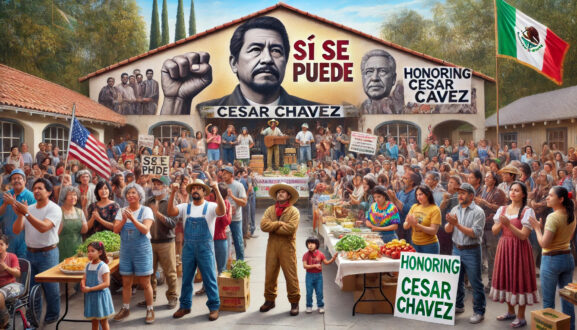
Nevada State Holiday Under Fire: Cesar Chavez Day Faces Removal Debate
The debate over Nevada’s state holiday honoring labor icon César Chávez has intensified, with lawmakers and advocacy groups locked in a contentious battle over its future. Once a symbol of solidarity for workers’ rights, the observance of César Chávez Day now finds itself at the epicenter of political and cultural crosscurrents, as critics question its relevance and supporters defend its legacy. The controversy transcends mere calendar adjustments—it reflects deeper fissures in how a state grapples with its identity, values, and the enduring struggle for social justice.
The Historical Weight of César Chávez Day
Established in 2009, Nevada’s César Chávez Day was a landmark acknowledgment of the Mexican-American labor leader’s contributions to farmworkers’ rights and civil rights movements. Chávez’s legacy, etched in the annals of American labor history, spans decades of organizing, strikes, and nonviolent resistance against exploitative agricultural practices. For many, the holiday serves as an annual reminder of the sacrifices made by those who toiled in obscurity to secure fair wages and humane working conditions. Yet, as the decades pass, the holiday’s original purpose has been diluted by bureaucratic inertia and shifting political priorities. The question now arises: Does the observance still resonate with the urgency it once did, or has it become a hollow gesture in an era of rapid social change?
The Critics’ Case: Why the Holiday is Under Scrutiny
Opponents of the holiday argue that its continued observance is anachronistic, pointing to the lack of tangible benefits for Nevada’s workforce. Unlike federal holidays that grant paid time off, Nevada’s César Chávez Day is often marked by perfunctory ceremonies rather than systemic reforms. Critics contend that the state’s labor laws remain stagnant, with agricultural workers—many of whom are undocumented—still vulnerable to exploitation. The holiday, they claim, has devolved into performative activism, a symbolic nod to a bygone era rather than a catalyst for meaningful progress. Additionally, some fiscal conservatives decry the administrative costs of maintaining the holiday, especially in a state grappling with budgetary constraints and competing priorities.
The Counterargument: A Beacon for Social Equity
Defenders of the holiday frame its potential removal as a betrayal of Nevada’s moral compass. For Latino communities, Chávez’s legacy is not merely historical—it is a living testament to resilience in the face of systemic discrimination. Advocacy groups emphasize that the holiday serves as an educational tool, fostering awareness of labor rights and immigrant contributions to the state’s economy. They argue that erasing the observance would erase a chapter of Nevada’s identity, one that underscores the interconnectedness of civil rights and economic justice. Moreover, they warn that dismantling the holiday could embolden opponents of progressive labor policies, signaling a retreat from the state’s commitment to equity.
The Political Chessboard: Who Holds the Power?
The debate has become a microcosm of Nevada’s polarized political landscape, where rural and urban interests often clash. Rural legislators, many of whom represent agricultural districts, may view the holiday as an unnecessary imposition, while urban lawmakers—particularly those from districts with large Latino populations—see it as a non-negotiable pillar of social justice. The outcome hinges on whether the holiday’s symbolic value outweighs its practical drawbacks. Lobbying efforts on both sides have intensified, with grassroots organizations mobilizing voters and corporate interests quietly shaping the discourse behind the scenes. The decision may ultimately rest on whether Nevada’s leadership prioritizes symbolism over pragmatism—or vice versa.
What’s Next for Nevada’s Labor Legacy?
As the debate rages, the future of César Chávez Day hangs in the balance. Will Nevada double down on its commitment to labor rights, or will the holiday be sacrificed on the altar of fiscal efficiency? The resolution could set a precedent for other states grappling with similar questions about the role of holidays in shaping collective memory. For now, the conversation extends beyond a single day on the calendar—it touches on the very essence of what a state chooses to celebrate and, by extension, what it chooses to forget. The outcome will reveal much about Nevada’s evolving identity and its willingness to confront the unfinished business of social justice.
The legacy of César Chávez endures not just in the fields he fought to improve, but in the debates he continues to inspire. Whether Nevada preserves his holiday or consigns it to history, the struggle for workers’ rights—and the symbols that represent it—remains as vital as ever.