Cesar Chavez Day 2026 Observed in Nevada Amid Review for 2027
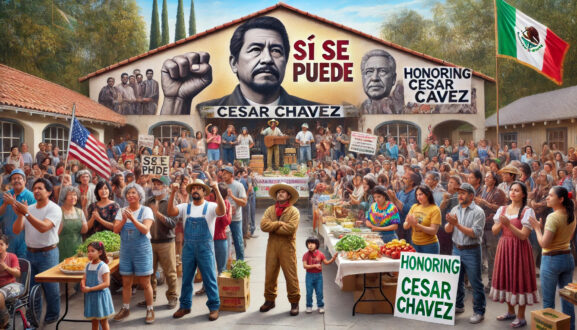
As the first light of March 31st, 2026, spills across the Nevada landscape, communities across the Silver State prepare to observe Cesar Chavez Day—a moment of reflection, gratitude, and renewed commitment to the principles of labor rights and social justice that the iconic civil rights leader championed. This annual observance, recognized as a state holiday in Nevada, transcends mere ceremonial acknowledgment; it serves as a poignant reminder of the enduring struggle for dignity in the workplace and the power of collective action. Yet, beneath the surface of parades, educational programs, and community gatherings lies a deeper narrative—one that probes the complexities of legacy, the evolution of labor movements, and the persistent relevance of Chavez’s vision in an era of shifting economic landscapes.
The Historical Underpinnings of a Day of Remembrance
Cesar Chavez Day is not merely a date on the calendar; it is a living testament to the labor activism that reshaped the agricultural industry in the 20th century. Born in 1927, Chavez’s formative years were steeped in the harsh realities of migrant farmworkers, a demographic subjected to exploitation, poverty wages, and deplorable living conditions. His journey from field laborer to labor leader was not one of passive endurance but of deliberate defiance—a refusal to accept the status quo. The United Farm Workers (UFW), co-founded by Chavez and Dolores Huerta, became the vanguard of a movement that wielded nonviolent protest as a tool for systemic change. The grape boycott of the 1960s and 1970s, a cornerstone of the UFW’s strategy, demonstrated the potency of economic pressure in securing concessions from powerful agricultural interests. Nevada’s observance of Cesar Chavez Day, therefore, is not an abstract homage but a direct acknowledgment of this history—a history that continues to resonate in the state’s diverse workforce.
Nevada’s Unique Intersection of Labor and Legacy
Nevada’s economy, often caricatured as a monolith of casinos and hospitality, is in fact a mosaic of industries where the echoes of Chavez’s labor struggles can still be heard. The state’s agricultural sector, though smaller than California’s, remains a vital component of its economy, particularly in regions like Fallon and the Reno-Sparks area. Yet, the observance of Cesar Chavez Day in Nevada extends beyond the fields. The state’s rapid urbanization and influx of technology-driven industries have introduced new dimensions to the labor landscape, from gig economy workers to tech sector employees grappling with issues of fair compensation and workplace equity. This juxtaposition of old and new labor challenges underscores the timelessness of Chavez’s mission. In Las Vegas, where the hospitality industry employs tens of thousands, the holiday serves as a bridge between the struggles of agricultural workers and the contemporary fight for living wages and union rights among service employees.
The Paradox of Commemoration and Contemporary Relevance
One of the most intriguing aspects of Cesar Chavez Day’s observance in Nevada is the paradox it presents: a holiday that honors a figure from a bygone era while addressing issues that remain unresolved. Critics often question the efficacy of such observances, arguing that they risk becoming perfunctory rituals devoid of tangible impact. Yet, in Nevada, the holiday has evolved into a platform for dialogue on contemporary labor issues. Panels, workshops, and community forums held in conjunction with the observance tackle topics such as wage theft, workplace safety, and the gig economy’s precarious labor conditions. The holiday, in this sense, functions as a catalyst for conversations that transcend nostalgia, forcing a reckoning with the unfinished business of labor rights in the 21st century. It is a reminder that the legacy of Cesar Chavez is not confined to history books but is an active, evolving force in shaping Nevada’s labor policies.
Looking Ahead: The Review for 2027 and Beyond
As Nevada prepares to review the observance of Cesar Chavez Day in 2027, the conversation inevitably turns to the holiday’s future. Will it remain a static commemoration, or will it adapt to address the evolving needs of the state’s workforce? The review process presents an opportunity to reassess the holiday’s role in Nevada’s cultural and economic fabric. Advocates argue for expanding educational initiatives, particularly in schools, to ensure that younger generations understand the historical context of Chavez’s work and its relevance to modern labor struggles. Others propose leveraging the holiday as a springboard for policy changes, such as strengthening protections for agricultural workers or addressing the systemic inequities faced by undocumented laborers. The review, therefore, is not merely an administrative exercise but a potential inflection point in how Nevada chooses to honor—and advance—Chavez’s legacy.
The observance of Cesar Chavez Day in Nevada is more than a ritual; it is a mirror reflecting the state’s labor history, its present challenges, and its aspirations for a more equitable future. As the sun sets on March 31st, 2026, the conversations sparked by the holiday will linger, shaping the contours of Nevada’s labor landscape for years to come. In the quiet moments between speeches and marches, there lies a deeper inquiry—one that asks not just how we remember the past, but how we choose to act in the present.