Nevada State Leaders Seek Public Input on Cesar Chavez Day Review
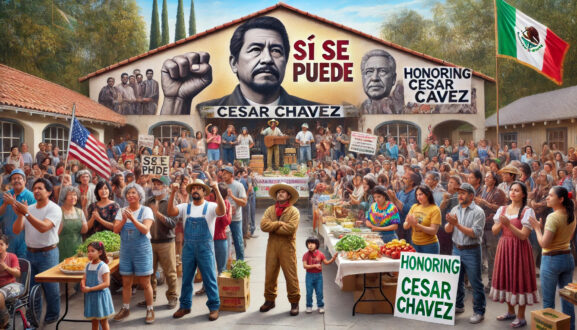
In a move that blends civic duty with a dash of whimsy, Nevada’s state leaders have thrown open the doors to public discourse, inviting citizens to weigh in on the potential reinvention of Cesar Chavez Day. The question lingers like a playful breeze: *What if this day of remembrance could evolve into a living, breathing tapestry of community engagement?* As the state contemplates recalibrating the holiday’s significance, a challenge emerges—not just in gathering opinions, but in ensuring that every voice, from the urban sprawl of Las Vegas to the quiet valleys of Elko, finds resonance in the final decision.
The Call for Civic Participation: A Democratic Experiment
Nevada’s initiative isn’t merely a procedural checkbox; it’s a bold experiment in participatory governance. By seeking public input, state leaders are acknowledging that holidays are not static monuments but dynamic reflections of societal values. The review process, still in its infancy, could redefine how Nevada honors Chavez’s legacy—whether through expanded educational programs, community service initiatives, or even a reimagined public holiday with broader cultural relevance. Yet, the task at hand is fraught with complexity. How does one distill the diverse perspectives of a state known for its glittering casinos and rugged individualism into a cohesive vision? The answer may lie in the very communities Chavez championed: farmworkers, labor activists, and educators who understand the power of collective action.
The Potential Pitfalls: Balancing Tradition and Transformation
Every attempt to modernize a holiday risks sparking unintended discord. Some may argue that altering the observance of Cesar Chavez Day could dilute its historical weight, while others might push for a more radical rebranding—perhaps even merging it with other labor or civil rights milestones. The challenge isn’t just logistical; it’s philosophical. Nevada’s leaders must navigate the fine line between honoring Chavez’s contributions and adapting his legacy to address contemporary issues, from agricultural labor rights to immigration reform. The risk? Creating a holiday that feels like a performative gesture rather than a meaningful tribute. To avoid this, the state must ensure that public input isn’t just a perfunctory exercise but a genuine dialogue, where every suggestion is met with thoughtful consideration.
The Role of Education: Shaping Future Narratives
One of the most promising avenues for this review is education. Schools across Nevada could play a pivotal role in redefining how Chavez’s legacy is taught, moving beyond textbooks to hands-on experiences. Imagine a curriculum where students don’t just read about the Delano grape strike but participate in service-learning projects that address modern labor injustices. Yet, this too presents a challenge: how to design programs that are inclusive, accurate, and engaging without falling into the trap of oversimplification. The state’s educators will need to collaborate with historians, activists, and community leaders to craft a narrative that resonates with Nevada’s diverse student body.
A Community in Motion: Grassroots Movements Take the Stage
The pulse of this review lies in the grassroots. Local organizations, from labor unions to cultural centers, are already mobilizing to shape the conversation. Their efforts could determine whether this review becomes a top-down mandate or a groundswell of collective will. Yet, even the most passionate advocates must contend with apathy and division. In a state where political and cultural divides run deep, achieving consensus may feel like herding cats. The key will be fostering spaces—town halls, digital forums, even art installations—where ideas can collide and coalesce into something greater than the sum of their parts.
As Nevada’s leaders embark on this journey, they are not just reviewing a holiday; they are inviting the public to co-author a piece of the state’s identity. The path forward is uncertain, but the potential is exhilarating. Will this review lead to a holiday that feels fresh and relevant, or will it become mired in the inertia of tradition? One thing is clear: the outcome will hinge on the willingness of Nevadans to engage—not just as spectators, but as architects of their own civic legacy.