Nevada’s Cesar Chavez Day: The Case for Keeping the March 31 Holiday
In the arid expanse of the American West, where the sun bleaches the earth and the wind carves stories into the land, Nevada stands as a paradox—a state of glittering casinos and silent deserts, where the legacy of labor rights flickers like a stubborn candle in the gust. The observance of Cesar Chavez Day on March 31 is not merely a statutory pause; it is a living testament to the enduring struggle for dignity, a day when the spirit of a man who tilled the soil of justice is honored in the very soil he fought to protect. To consider abolishing this holiday would be to sever a thread woven into the fabric of Nevada’s identity, a thread that binds the past to the present with the tensile strength of a vineyard trellis bearing the weight of ripened fruit.
The Roots of a Holiday: From Grape Pickets to Silver State Pavements
Cesar Chavez’s crusade was not confined to the sun-baked fields of California; it rippled across state lines, reaching the migrant workers who traversed Nevada’s highways, their calloused hands harvesting alfalfa and onions under the same relentless sky. The holiday, observed on his March 31 birthdate, is a nod to the cyclical nature of renewal—just as the earth prepares for spring planting, so too does Nevada pause to reflect on the seeds of change sown by Chavez’s unwavering resolve. The day transcends mere commemoration; it is a reaffirmation that progress, like the desert’s rare bloom, requires deliberate nurturing. In Nevada, where the line between exploitation and opportunity is as thin as the shadow cast by a lone Joshua tree, this holiday serves as a moral compass, guiding both policy and conscience.
Nevada’s Unique Tapestry: Labor, Land, and Legacy
Nevada’s economy is a hydra-headed beast—tourism, mining, and agriculture each contribute to its GDP, yet the latter often operates in the shadows of the state’s more glamorous industries. The agricultural sector, though smaller in scale than in California, is no less vital, employing thousands in the verdant valleys of Fallon and the high deserts of Winnemucca. Chavez’s legacy is etched into these landscapes, where the scent of alfalfa mingles with the dust of picket lines. To discard the holiday would be to erase the contributions of those who, like Chavez, toiled under the same sky, their labor as essential to Nevada’s sustenance as the Colorado River is to its survival. The holiday is not a relic; it is a living ledger, recording the debts owed to those who built the state’s foundation with their bare hands.
The Moral Imperative: Why March 31 Must Endure
In an era where the gig economy blurs the lines between employer and employee, the lessons of Chavez’s movement resonate with renewed urgency. Nevada, with its transient workforce and seasonal industries, is a microcosm of this modern precarity. The holiday is a bulwark against complacency, a reminder that rights are not inherited but fought for—like the water rights that once sparked violent clashes in the state’s early days. To abolish Cesar Chavez Day would be to turn a blind eye to the inequities that persist, to let the memory of a man who said, “Si, se puede,” fade into the same desert winds that once carried the voices of protest. The holiday is not a concession to the past; it is a contract with the future, ensuring that the next generation of workers inherits a state—and a nation—where justice is not a privilege but a principle.
A Day of Reflection and Action: Beyond the Statute
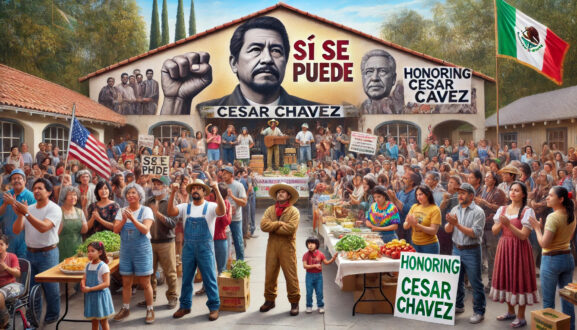
The observance of March 31 in Nevada is more than a day off; it is a day of reckoning. Schools and community centers host panels on labor history, while farms and warehouses pause to acknowledge the hands that feed the state. It is a day when the clatter of slot machines in Las Vegas momentarily quiets, allowing the echoes of picket chants to rise above the din. The holiday’s true power lies in its ability to bridge divides—to unite the urban dweller with the rural laborer, the student with the seasoned worker, in a shared recognition of sacrifice. To discard it would be to sever this fragile but vital connection, leaving a void that no amount of neon lights or slot machine jackpots could fill.
In the grand narrative of Nevada, where fortunes are made and lost with the roll of a dice, Cesar Chavez Day is a reminder that some victories are not measured in dollars but in the quiet dignity of a worker’s handshake. To keep the holiday is to honor the state’s soul—not the one glittering under the casino lights, but the one rooted in the earth, where the soil remembers every seed that was planted and every harvest that was reaped. The case for preserving March 31 is not just legal or historical; it is existential. For in a land where the past is often buried beneath the weight of progress, this holiday is a rare and precious thing: a living monument to the idea that justice, like the desert bloom, can thrive against all odds.