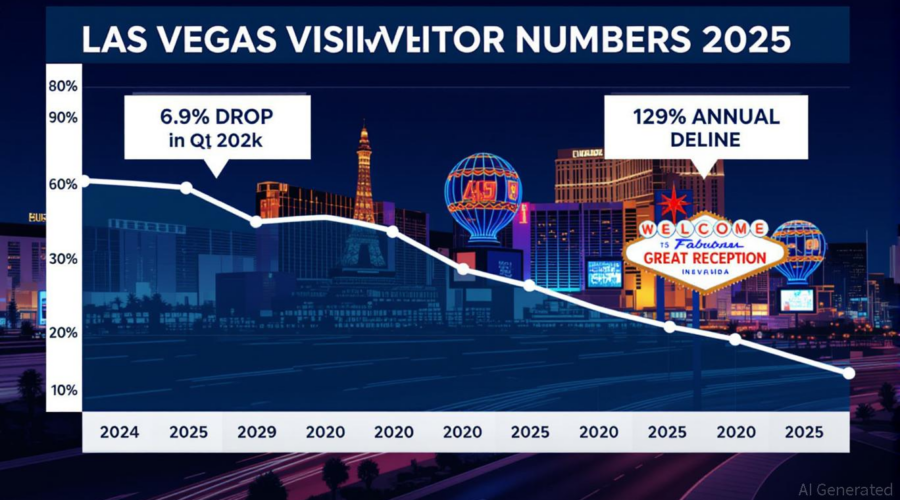
Nevada’s Tourism Downturn: What Hospitality Investors Need to Know
The neon glow of the Strip flickers like a dying ember. Once the pulsating heart of global tourism, Nevada’s legendary hospitality sector now faces an existential reckoning. What began as a post-pandemic rebound has curdled into a sustained downturn, leaving investors scrambling to decipher the shifting sands beneath their high-stakes bets. This isn’t merely a cyclical dip—it’s a tectonic shift in consumer behavior, economic pressures, and competitive dynamics that demands a radical reappraisal of risk and opportunity.
The Illusion of Recovery: Why the Numbers Lie
Industry reports trumpet “resilience,” yet the data tells a different story. Visitor volumes have plateaued below pre-2020 peaks, while per-capita spending stagnates. The culprit? A paradox of choice. Nevada’s once-unassailable monopoly on experiential leisure has eroded. From the allure of international escapades to the rise of “staycations” closer to home, travelers now treat Las Vegas not as a bucket-list destination but as one option among many. The result? A brutal compression of margins, where occupancy rates hover at 80%—a figure that masks deeper vulnerabilities in pricing power and ancillary revenue streams.
The Demographic Divide: Who’s Still Showing Up?
Not all visitors are created equal. High-rollers, the lifeblood of casino profitability, are dwindling in numbers, their discretionary spending siphoned off by cryptocurrency’s volatility and the lure of global gambling hubs like Macau and Singapore. Meanwhile, the mass-market tourist—a once-reliable cash cow—has been hollowed out by inflation. Millennials and Gen Z, the new vanguard of leisure spending, prioritize authenticity over spectacle. They flock to boutique experiences, eschewing the monolithic resorts that once defined Nevada’s appeal. The industry’s failure to pivot from “bigger is better” to “more meaningful” has left a chasm where demand once thrived.
The Cost of Complacency: Labor, Regulation, and the Erosion of Edge
Nevada’s hospitality sector operates under a perfect storm of self-inflicted wounds. Labor shortages—exacerbated by the state’s refusal to embrace remote work’s flexibility—have inflated wages to unsustainable levels. Meanwhile, regulatory burdens, from gaming license fees to environmental mandates, nibble away at profitability. The state’s vaunted “business-friendly” reputation is fraying at the edges, as neighboring jurisdictions poach operators with lower tax regimes and streamlined compliance. Worse still, Nevada’s once-unmatched infrastructure—its sprawling convention centers and logistical prowess—now feels like a relic in an era where hybrid events and decentralized gatherings dominate.
Opportunity in the Ruins: Where to Place Bets Now
Yet despair is a premature epitaph. The downturn has exposed cracks that bold investors can exploit. The first frontier? Diversification. Properties that once relied on gaming now pivot to mixed-use models—integrating residential, retail, and wellness components to create resilient revenue streams. The second? Technology. AI-driven personalization, dynamic pricing algorithms, and immersive digital experiences can claw back the high-value patrons slipping through competitors’ fingers. Finally, there’s the untapped potential of secondary markets. Cities like Reno and Henderson, once overshadowed by the Strip’s glare, are emerging as lower-risk alternatives for investors willing to bet on long-term growth rather than short-term spectacle.
The Nevada of tomorrow won’t resemble the neon-drenched colossus of yesteryear. But in its unraveling lies the seed of reinvention. The question isn’t whether the state can recover—it’s whether its stakeholders have the foresight to build something far greater than what came before. The house always wins, but only if the players know when to fold—and when to double down.