
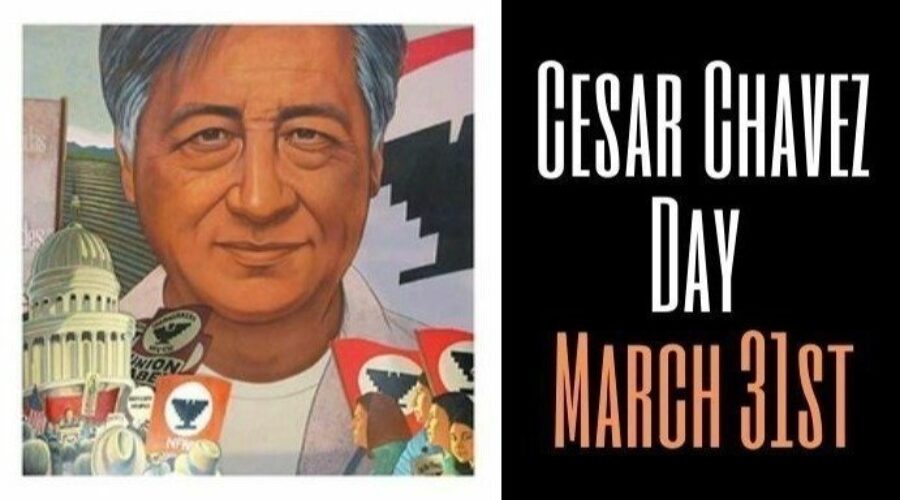
The Cesar Chavez Day Holiday in Nevada Is in Jeopardy
In the arid expanse of Nevada’s legislative chambers, a storm is brewing—not of dust and wind, but of contention and consequence. The fate of Cesar Chavez Day as a state holiday hangs in the balance, its survival hinging on a delicate dance of political will and public sentiment. Once a symbol of solidarity and progress, this commemoration now finds itself entangled in a web of fiscal pragmatism and ideological divides. The question lingers like a specter: Will Nevada honor the legacy of a labor icon, or will the holiday be sacrificed at the altar of fiscal austerity?
The Weight of History and the Echoes of Labor
Cesar Chavez, the indomitable leader of the United Farm Workers, carved his name into the annals of American history through relentless advocacy for the rights of agricultural laborers. His tireless crusade for fair wages, humane working conditions, and dignity resonated far beyond the fields of California, inspiring movements across the nation. Nevada, with its deep ties to the agricultural and hospitality industries, has long been a microcosm of the struggles Chavez fought to alleviate. To designate a day in his honor is not merely an act of remembrance; it is a testament to the state’s commitment to the values he championed.
Yet, the holiday’s observance in Nevada has never been without controversy. Critics argue that the economic burden of an additional paid holiday outweighs its symbolic significance. Proponents, however, counter that the intangible benefits—unity, reflection, and the reinforcement of labor rights—are invaluable. The debate is not just about a day off; it is about the soul of the state and its relationship with its workforce.
The Fiscal Fracture: Balancing Budgets and Beliefs
The primary obstacle to Cesar Chavez Day’s permanence in Nevada is the fiscal strain it imposes. In an era where state budgets are stretched thin by competing priorities—education, infrastructure, healthcare—the cost of an extra holiday looms large. Lawmakers grapple with the arithmetic of lost productivity and the necessity of fiscal responsibility. Some argue that the holiday could be reimagined as a day of service, transforming its observance into an investment rather than an expenditure. Others propose a compromise: a biennial celebration, alternating with other commemorative days to ease the financial burden.
Yet, the fiscal argument is not without its detractors. Advocates point to the long-term gains of honoring Chavez’s legacy—enhanced worker morale, strengthened community bonds, and the cultivation of a workforce that feels valued. They contend that the holiday’s true cost is not measured in dollars but in the erosion of shared values. The tension between pragmatism and principle has never been more pronounced.
The Political Chessboard: Who Holds the Power?
The fate of Cesar Chavez Day in Nevada is not merely a matter of public opinion; it is a political chess match. Legislators, lobbyists, and grassroots organizations vie for influence, each wielding arguments that resonate with their constituents. The holiday’s survival may hinge on the outcome of upcoming elections, the sway of advocacy groups, or the willingness of key figures to champion its cause. Public hearings have become battlegrounds, where testimonies clash like opposing tides. Will the voices of labor unions and community leaders drown out the calls for fiscal restraint, or will the scales tip in favor of economic caution?
The political landscape is further complicated by the holiday’s uneven observance across the state. While some counties and municipalities have embraced the day with vigor, others have relegated it to the periphery. This patchwork approach underscores the broader challenge: Can Nevada forge a unified stance on a holiday that embodies both its past and its future?
A Call to Reflection: What Do We Stand to Lose?
Beyond the debates and the dollars, the erosion of Cesar Chavez Day as a state holiday forces a reckoning with what we, as a society, choose to prioritize. Do we measure progress solely in economic terms, or do we acknowledge the intangible yet irreplaceable value of honoring those who have shaped our collective conscience? The holiday is more than a day off; it is a reminder of the struggles that have paved the way for contemporary labor rights. To discard it is to risk forgetting the sacrifices that made modern workplaces possible.
For Nevada, a state built on the backs of laborers and dreamers, the stakes are particularly high. The holiday is a bridge between the state’s agricultural roots and its evolving identity. To abandon it is to sever a vital connection to the past—and to the principles that continue to define its future.
The tides of fate are shifting, and the future of Cesar Chavez Day in Nevada remains uncertain. Yet, in the crucible of this debate, there lies an opportunity—a chance to reaffirm the values that bind us together. Whether through fiscal compromise, political resolve, or a renewed commitment to labor rights, the holiday’s fate will be decided not just in the halls of power, but in the hearts of the people. The question is not merely whether Nevada will keep Cesar Chavez Day, but what kind of state it aspires to be.