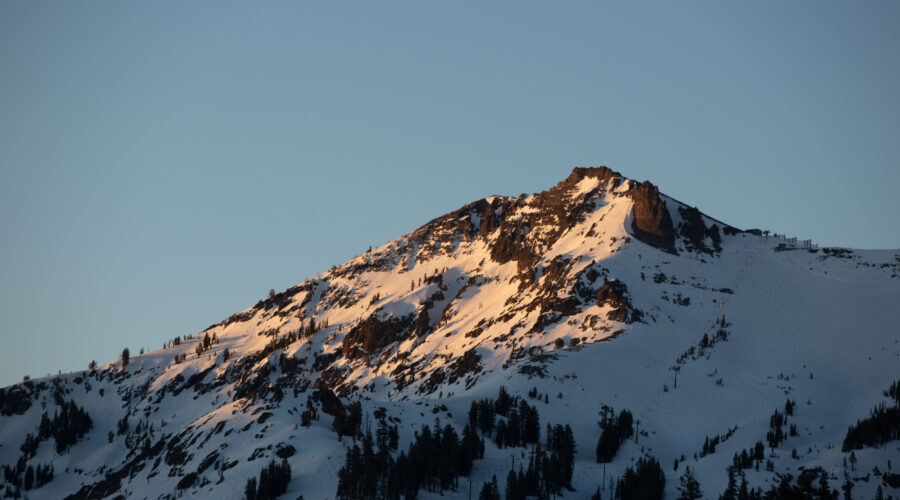
Lake Tahoe’s 17% Snowpack: Before and After Satellite Images
The once-placid surface of Lake Tahoe, cradled between Nevada and California’s rugged peaks, now bears the indelible marks of a shifting climate. Satellite images captured over the past year reveal a stark transformation—a 17% reduction in snowpack that whispers of broader ecological upheaval. This isn’t merely a statistical dip; it’s a visual elegy for a landscape that has long thrived under the benevolent weight of winter’s embrace. The stark contrast between the snow-laden contours of yesteryear and the skeletal ridges of today tells a story of resilience and fragility, where the mountains stand as silent witnesses to nature’s unrelenting flux.
The Vanishing Crown of Winter
Imagine the Sierra Nevada’s snowpack as a regal crown, its glistening jewels of ice and snow adorning the peaks from December to May. This crown, once a symbol of abundance, now sits precariously, its once-imposing bulk reduced to a fraction of its former glory. The 17% decline isn’t just a number—it’s a visual hemorrhage, a slow unraveling of an ecosystem that has sustained life for millennia. The satellite images lay bare the truth: the mountains, stripped of their winter mantle, reveal a topography that feels both alien and achingly familiar, as if we’re glimpsing a future that has already arrived.
The loss is most acute in the high-altitude basins, where snowmelt once fed the lifeblood of Lake Tahoe itself. These areas, once blanketed in a seamless white expanse, now resemble a patchwork quilt of exposed granite and skeletal trees, their branches clawing at the sky like arthritic fingers. The absence of snow isn’t just a seasonal shift; it’s a tectonic change in the region’s hydrological rhythm, one that threatens to disrupt the delicate balance of flora, fauna, and human communities alike.
The Ghosts of Snows Past
To understand the magnitude of this transformation, one must juxtapose the present with the past—not as a fleeting memory, but as a visceral confrontation. The before-and-after images are less like photographs and more like time-lapse x-rays, revealing the bones of the landscape in ways that defy recognition. In the older frames, the snowpack stretches like a frozen river, its undulating surface a testament to nature’s artistry. Today, those undulations are gone, replaced by jagged ridges that cast long, accusatory shadows across the valleys below.
This isn’t merely a loss of aesthetics; it’s a loss of function. The snowpack acts as a natural reservoir, slowly releasing water into the lake and surrounding watersheds as temperatures rise. Without it, the region faces a precarious future, where droughts become more severe and wildfires more rampant. The satellite images don’t just document change—they foreshadow a cascade of consequences, each one a domino poised to topple in the absence of intervention.
The Allure of a Fragile Paradise
Yet, for all its devastation, the altered landscape retains a haunting beauty. The exposed granite, once hidden beneath layers of snow, now gleams under the sun, its polished surfaces reflecting the sky in hues of azure and silver. The skeletal forests, stripped of their winter camouflage, stand in stark silhouette against the horizon, their gnarled forms a testament to endurance. There’s a melancholic poetry in this transformation—a reminder that even in decline, nature’s allure persists, albeit in a different form.
Lake Tahoe, too, bears the scars of this shift. The once-pristine waters, fed by snowmelt, now face the specter of reduced inflows and rising temperatures. The lake’s renowned clarity, a source of pride for generations, may dim as sediment and algae proliferate in the absence of cold, nutrient-rich runoff. The satellite images capture this slow erosion of a natural wonder, where the lake’s surface shimmers less like a mirror and more like a fractured pane of glass, its edges blurred by the encroaching realities of a warming world.
A Call to Witness and Act
The story of Lake Tahoe’s diminished snowpack is not one of despair alone—it is a call to witness, to understand, and to act. These satellite images are more than data points; they are a mirror held up to humanity, reflecting our collective impact on the planet. The 17% reduction is a warning, a siren song urging us to reconsider our relationship with the natural world. Will we heed its call, or will we continue to watch as the crown of winter dissolves into memory?
The choice is ours, but the time for action is now. The mountains, the lake, and the communities that depend on them are counting on it.