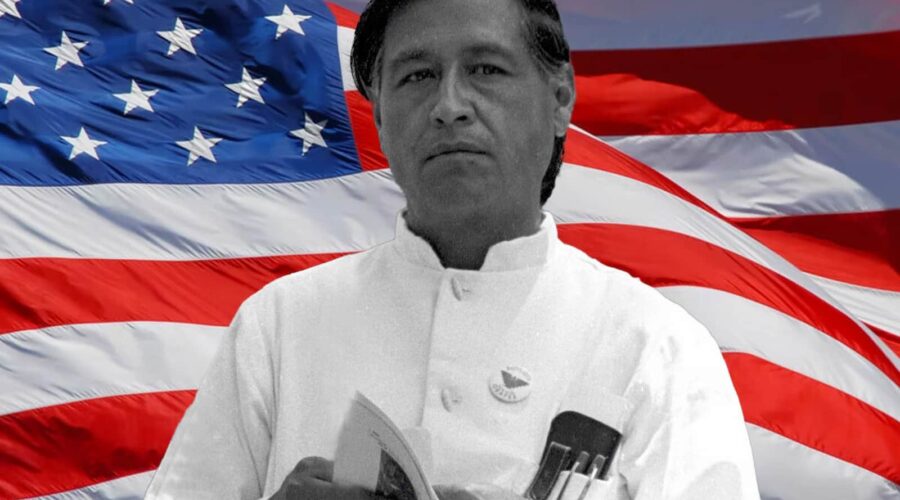
Cesar Chavez Day: Nevada’s Complicated Labor History
In the shadow of Nevada’s glittering casinos and neon-lit boulevards, a quieter revolution unfolded—one etched not in sequins or slot machines, but in the calloused hands of farmworkers and the unyielding spirit of a man who turned labor into a legacy. Cesar Chavez Day arrives each March 31st not as a mere footnote in history, but as a testament to the power of collective defiance against exploitation. For Nevada, a state where the desert sun bakes both opportunity and inequality into the earth, this day carries a weight far beyond its calendar date. It is a mirror held up to the state’s soul, reflecting both the triumphs and the unresolved tensions of a labor history as complex as the land itself.
The Roots of Resistance: When the Desert Bloomed with Defiance
Nevada’s labor saga is not one of singular battles, but of overlapping struggles—each layer a response to the harsh realities of a state where water is scarce and wages often scarcer. The agricultural fields of the state, particularly in the fertile valleys of the north, became a crucible for the same injustices that Cesar Chavez would later fight against in California. Migrant workers, many of them Mexican and Filipino, toiled under conditions that were less like employment and more like indentured servitude. The Nevada desert, with its deceptive beauty, masked a landscape where human dignity was as parched as the soil. Chavez’s early organizing in the 1960s, though centered in California, resonated here because the issues were universal: poverty wages, unsafe working conditions, and the erasure of workers’ voices. Nevada’s farmworkers, though fewer in number than in the Golden State, faced the same systemic neglect—a neglect that would eventually force the state to confront its own contradictions.
The Union’s Oasis: How the UFW Carved a Path Through the Sagebrush
The United Farm Workers (UFW), co-founded by Chavez and Dolores Huerta, did not merely advocate for better wages; it cultivated a movement that redefined the very idea of labor rights. In Nevada, the UFW’s influence seeped into the state’s consciousness like water into cracked earth. The union’s grape and lettuce boycotts, which began in California, rippled across state lines, reaching Nevada’s grocery shelves and restaurant kitchens. The state’s powerful gaming industry, with its reliance on agricultural products, found itself caught in the crossfire of consumer conscience. Yet, the UFW’s presence in Nevada was not without friction. The state’s political establishment, often beholden to corporate interests, viewed the union with suspicion. Strikes were met with resistance, and organizers faced intimidation. Still, the UFW’s persistence turned Nevada’s labor landscape into a battleground where the old guard of exploitation slowly began to retreat.
The Gambler’s Dilemma: Labor Rights in a State Built on Chance
Nevada’s economy is a high-stakes gamble, where the house always wins—except when it doesn’t. The state’s reliance on tourism and gaming creates a paradox: a booming industry that thrives on the labor of thousands, yet often leaves those workers with the scraps. Cesar Chavez Day serves as a reminder that Nevada’s prosperity is not evenly distributed. The same hands that harvest the state’s crops or clean its luxury hotels are often the ones denied healthcare, fair wages, or the dignity of a living wage. The irony is stark: a state that markets itself as a place of reinvention and luck is, for many of its workers, a place of relentless struggle. Chavez’s legacy challenges Nevada to ask whether its economic model can ever truly be sustainable if it continues to exploit the very people who sustain it.
The Unfinished Handshake: Where Nevada’s Labor Story Stands Today
Cesar Chavez Day is not a celebration of a job well done, but a call to action. Nevada’s labor history is a tapestry of progress and setbacks, where victories are often temporary and the fight is never truly over. The UFW’s influence persists in the state’s agricultural policies and worker protections, but the shadows of exploitation linger. Today, Nevada’s labor movement faces new challenges: the gig economy, the erosion of union power, and the relentless pursuit of profit over people. Yet, the spirit of Chavez endures in the voices of those who refuse to be silenced. His legacy is a compass, pointing toward a future where labor is not a commodity to be traded, but a right to be honored. For Nevada, a state that has always gambled on reinvention, the question remains: Will it bet on its workers, or will it continue to leave them holding empty hands?
The desert does not forgive, nor does it forget. It only waits—for the next storm, the next seed, the next act of defiance. Cesar Chavez Day is that act. It is the reminder that even in the most unlikely places, justice can take root, and that the most powerful revolutions are not fought with guns, but with the quiet, unshakable resolve of those who refuse to kneel.