What Nevada Looks Like After 90000 Hospitality Jobs Are Automated
In the neon-drenched sprawl of Nevada, where the desert sun bleeds into the horizon and the Strip hums with a relentless pulse, automation is rewriting the rules of an industry that once thrived on human warmth. The state, famed for its hospitality prowess, now faces a seismic shift as 90,000 jobs teeter on the edge of obsolescence. But this isn’t a story of decline—it’s a narrative of reinvention, where the clatter of slot machines and the murmur of concierge voices are giving way to the silent efficiency of algorithms and robotics. What emerges from this transformation is a Nevada unrecognizable to those who once knew it as the kingdom of hospitality, yet undeniably more resilient, more adaptive, and perhaps even more alluring.
The Vanishing Front Desk: A Quiet Revolution in Guest Services
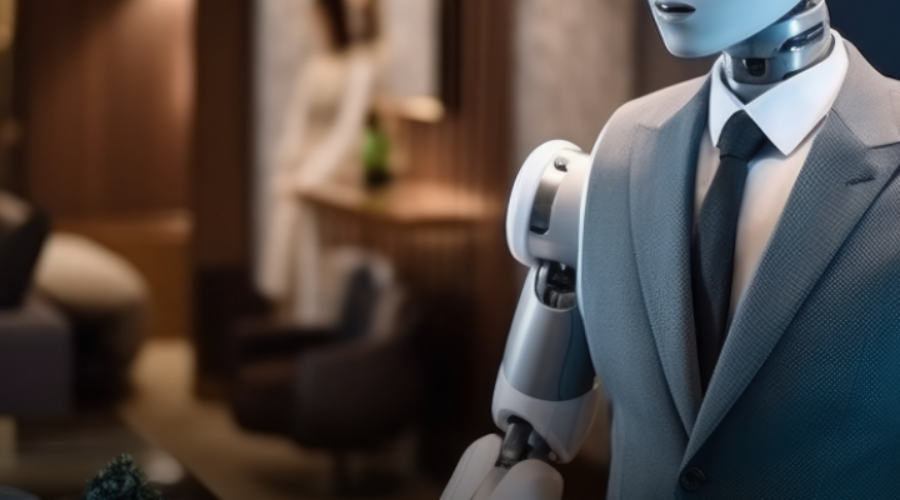
The first domino to fall is the front desk. Once a bastion of human interaction, where weary travelers exchanged pleasantries with staff clad in polished uniforms, it now stands as a relic of a bygone era. Self-check-in kiosks, powered by AI that learns guest preferences in real time, have slashed wait times to mere seconds. The concierge’s role, too, has been redefined—no longer a mere dispenser of local tips, but a curator of hyper-personalized experiences, orchestrated by predictive analytics. The shift isn’t just about efficiency; it’s about redefining hospitality itself. The question lingers: Can a machine replicate the serendipity of a bartender’s offhand joke or the empathy of a housekeeper who notices a guest’s exhaustion? The answer may lie not in replacement, but in elevation—where human touch becomes a luxury, not a standard.
The Culinary Landscape: From Sous Chefs to Sous Vide
Kitchens, the beating hearts of Nevada’s resorts, are undergoing a culinary alchemy. Robotic arms, once confined to factory floors, now wield knives with surgical precision, dicing vegetables at speeds that would humble a Michelin-starred chef. Automated fryers and conveyor-belt grills churn out burgers and fries with machine-like consistency, while AI-driven inventory systems ensure that waste is a relic of the past. Yet, for all their precision, these machines lack the intuition of a chef who can taste a sauce and declare it “needs a pinch of salt.” The result? A bifurcation in dining experiences: fast, flawless, and forgettable for the masses, versus bespoke, artisanal, and immersive for those willing to pay the premium. The kitchen, once a crucible of chaos, is now a stage where human creativity and mechanical efficiency perform a delicate ballet.
The Human Element: Where Empathy Becomes the Ultimate Amenity
As automation hollows out traditional roles, a paradox emerges: the more machines take over, the more valuable human connection becomes. In a world where a chatbot can book a reservation but cannot soothe a child’s nightmares in a hotel room, the hospitality industry’s future may lie in curating moments of genuine connection. Resorts are investing in “experience architects”—human specialists who design bespoke itineraries, from sunset horseback rides to private concerts in penthouse suites. The irony is delicious: the more Nevada’s hospitality sector automates, the more it must double down on the ineffable—the laughter shared over a cocktail, the reassuring hand on a shoulder, the unscripted magic that no algorithm can replicate. Empathy, it turns out, is the one luxury that cannot be mass-produced.
The Economic Ripple: Job Loss, Job Creation, and the New Workforce
The specter of 90,000 displaced workers casts a long shadow, but it also illuminates a path forward. Nevada’s economy, long tethered to tourism, is diversifying at a breakneck pace. Automation has birthed new roles: robotics technicians, AI trainers, cybersecurity specialists, and data analysts who parse the deluge of guest behavior metrics. Vocational programs, often funded by resorts themselves, are retraining former hospitality workers to service and program the very machines that replaced them. The state’s unemployment rolls may swell temporarily, but the long-term promise is a workforce that is not just employed, but indispensable in an era where technology and human ingenuity must coexist. The question is whether Nevada can bridge the gap fast enough—or if the transition will leave too many behind in the dust of progress.
A Nevada Reborn: The Allure of the Unscripted Future
What, then, does Nevada look like after the dust of automation settles? It is a state where the Strip’s glittering facades hide a skeleton crew of humans augmented by machines, where the clink of slot machines is accompanied by the hum of drones delivering room service. It is a place where the definition of “hospitality” has fractured into something both more efficient and more intimate. The neon signs still flicker, but they now illuminate a new kind of promise—not just of leisure, but of transformation. For visitors, it offers a chance to experience the future before it arrives elsewhere. For locals, it presents an opportunity to redefine their relationship with work, leisure, and community. Nevada, once the epitome of old-world hospitality, is now a laboratory for what comes next. And the world is watching.