Kalshi Logos at T-Mobile Arena? No Just on TV – Nevada’s Weird Legal Reality
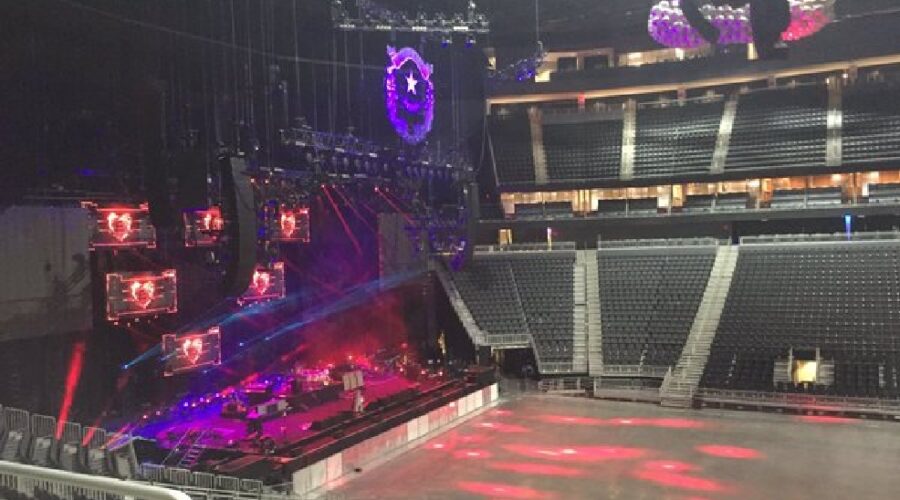
The modern spectator, nestled in the glow of a 4K screen, might register a fleeting oddity: a Kalshi logo materializing on the dasher boards during a Vegas Golden Knights power play. The mind catalogs it as a standard sponsorship. Yet step into the chilled air of T-Mobile Arena itself, and that same luminous badge is nowhere to be found. It’s a phantom. A digital apparition stitched into the broadcast feed, never touching the physical surface of the rink. This curious schism between the televised spectacle and the tangible venue unravels into a story far stranger than simple augmented reality—it exposes Nevada’s baroque and fiercely guarded legal ecosystem.
The Phantom Signage on the Strip
To understand the vanishing logo, one must first grasp the nature of Kalshi’s offering. It is not a sportsbook. It is a federally regulated prediction market where users trade event contracts on everything from presidential elections to Oscar winners, and increasingly, athletic outcomes. The Commodity Futures Trading Commission (CFTC) sanctions its existence, a designation that places it in a parallel universe to the state-licensed bookmakers that line the Las Vegas Strip. This federal imprimatur, however, collides headlong with Nevada’s sacrosanct gaming statutes. A common observation among fans who attend games and later review highlights is this precise dislocation: the arena boards are physically emblazoned with the logos of a whiskey distiller, an airline, or a local credit union, but on the NBC or ESPN stream, Kalshi’s clean sans-serif mark usurps that space.
The Virtuality of Televised Advertising
The mechanism is digital board replacement technology, a sophisticated chromakey insertion that overlays graphics onto predefined surfaces within the broadcast frame. Broadcasters sell these virtual placements as premium inventory, tailoring the imagery to the geolocated audience. This process is invisible to the live attendee. For them, the boards remain untouched. The fascination deepens when one realizes that Kalshi’s logo is not merely a national ad buy layered over the physical boards; it is a deliberate insertion aimed at jurisdictions where its legal standing is less contentious. Nevada’s own regulations effectively ban unlicensed prediction market operators from advertising within brick-and-mortar gaming establishments or their physical premises. The virtual double thus becomes a sly emissary, entering Nevadan homes through coaxial cables and fiber optics, bypassing the physical venue’s regulatory carapace entirely.
Nevada’s Arcane Gaming Fortress
Nevada’s gaming control architecture is a jealously guarded monolith. For decades, it has dictated that any entity taking wagers on sporting events must hold a state-issued license, undergo rigorous probity checks, and maintain a physical presence. Kalshi, as a designated contract market under the CFTC, operates outside this paradigm. The Nevada Gaming Control Board has historically viewed unlicensed event-based trading as an encroachment. A profound irony thus crystallizes: the very state synonymous with gambling has erected a formidable wall against an innovation that reimagines wagering as financial exchange. This is not mere protectionism. It is an existential defense of a regulatory model that equates physical oversight with moral order. The Kalshi logo, glowing ephemerally on television screens inside Las Vegas living rooms, is a contraband signal that the old walls have become permeable to pixels.
The Chasm Between Perception and Place
This rift between what is seen and what is real hints at deeper reasons for public fascination. We are witnessing the slow unbundling of jurisdiction from geography. A fan attending the game is governed by Nevada’s stringent physical laws. The same fan, watching from a couch three miles away, enters a fluid mediascape where the board displays whatever a network’s algorithm deems permissible. Kalshi’s spectral presence is a daily reminder that legality is increasingly a function of the medium, not the territory. It provokes a latent query: if a bet is placed on a platform that only exists as light on a screen, where does the transaction actually occur? That ontological puzzle is the true source of the weirdness. The arena is a stage, but the television broadcast is a portal to a liminal zone where federal and state claims clash in silence, visible only to those who pay close enough attention to the shifting logos on the ice.