April 1 Snowpack Measures 17% in Lake Tahoe Basin: Nevada on Alert
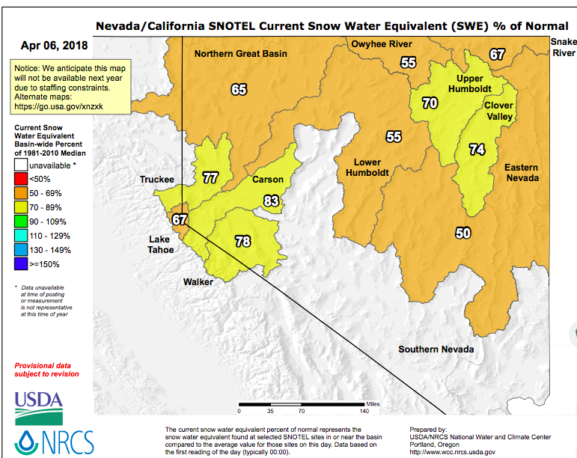
The April 1 snowpack measurement in the Lake Tahoe Basin has plummeted to a mere 17% of its historical average, sending ripples of concern through Nevada’s water management circles. This stark figure isn’t just a number—it’s a harbinger of broader climatic shifts that are reshaping the very foundations of regional hydrology. As the Sierra Nevada’s snowpack dwindles, the implications stretch far beyond the basin’s shimmering shores, threatening ecosystems, municipal water supplies, and the delicate balance of a landscape that has thrived for millennia. The alarm bells are ringing, but the deeper story lies in the cascading consequences of a warming world where snow, once a reliable constant, now behaves like a capricious guest.
The Vanishing Snowpack: A Symptom of a Larger Crisis
The 17% snowpack measurement isn’t an isolated anomaly—it’s a symptom of a decades-long trend. Scientists have observed a steady decline in snowfall across the Western United States, with the Sierra Nevada particularly vulnerable due to its Mediterranean climate and elevation-dependent snowfall patterns. Warmer temperatures are conspiring with shifting precipitation dynamics to rob the mountains of their winter blanket, a transformation that accelerates snowmelt and reduces the slow, steady runoff that sustains rivers and reservoirs through the dry summer months. The Lake Tahoe Basin, a high-altitude jewel cradled between Nevada and California, is no stranger to these changes. Its iconic clarity and vibrant ecosystems depend on a predictable snow cycle, one that is now unraveling at an unsettling pace.
Nevada’s Water Security in the Crosshairs
For Nevada, a state already grappling with arid conditions and burgeoning urban demand, the shrinking snowpack is a direct threat to water security. The Truckee River, which drains the Lake Tahoe Basin, is a lifeline for Reno and Sparks, supplying drinking water and irrigation for agricultural lands. With less snowmelt to replenish the river, municipalities are forced to confront tough decisions—restricting usage, investing in costly infrastructure, or gambling on the whims of weather patterns that grow increasingly erratic. The 17% figure isn’t just a statistic; it’s a wake-up call that the state’s water resilience strategies must evolve rapidly to avoid future shortages. Conservation efforts, groundwater recharge programs, and innovative storage solutions are no longer optional—they are necessities in a landscape where every drop counts.
Ecological Fallout: The Unseen Consequences
Beyond the human realm, the dwindling snowpack is wreaking havoc on the basin’s delicate ecosystems. The delayed snowmelt disrupts the phenological rhythms of flora and fauna, from the alpine wildflowers that rely on gradual thawing to the trout populations that depend on cold, oxygen-rich streams. Even the basin’s namesake, the Lahontan cutthroat trout, faces existential threats as warming waters and reduced flows shrink its habitat. The interconnectedness of these systems reveals a troubling truth: the snowpack isn’t just a reservoir of water—it’s the architect of an entire ecological tapestry. When that tapestry frays, the repercussions echo through the food web, altering the very character of the landscape.
Adapting to an Uncertain Future
In the face of these challenges, adaptation is no longer a distant concept—it’s an immediate imperative. Water managers are exploring a spectrum of solutions, from cloud seeding to enhance precipitation to the restoration of meadows that act as natural sponges, slowing runoff and recharging aquifers. Meanwhile, communities are reimagining their relationship with water, embracing drought-resistant landscaping and graywater recycling. The 17% snowpack measurement serves as a catalyst, compelling stakeholders to collaborate across sectors and borders. It’s a reminder that resilience isn’t built in isolation; it’s forged through collective action and forward-thinking policies that prioritize sustainability over short-term convenience.
The Lake Tahoe Basin’s snowpack may be shrinking, but the urgency it has inspired is anything but fleeting. This moment is a crucible, testing the adaptability of a region that has long relied on the predictability of snow. Yet, within this challenge lies an opportunity—to redefine our connection to the natural world and to build a future where water, once taken for granted, is stewarded with intention. The snow may be vanishing, but the lessons it leaves behind could be the foundation of a more resilient tomorrow.