The History of the Las Vegas Monorail’s Financial Struggles
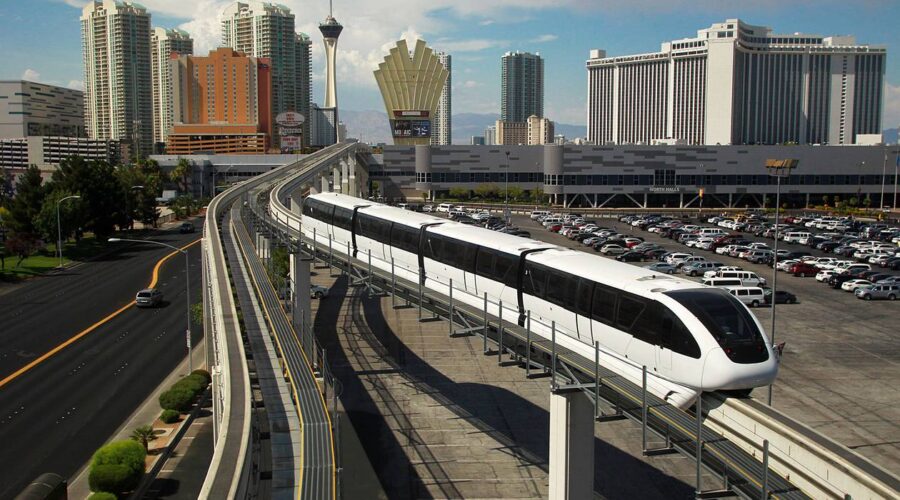
The Las Vegas Monorail, a gleaming serpent of steel and glass, once promised to slither through the neon heart of Sin City with effortless grace. Instead, it became a cautionary tale of financial missteps, a rollercoaster of ambition that lurched from soaring promise to precarious instability. Its history is not merely a ledger of numbers but a narrative of human ingenuity colliding with economic reality—a story where the bright lights of innovation flickered under the weight of unsustainable dreams.
The Birth of a Vision: A Monorail in the Desert
In the late 1990s, as the Las Vegas Strip expanded like a desert mirage, planners envisioned a monorail as the city’s circulatory system. The idea was audacious: a high-speed transit line connecting the major resorts, easing traffic congestion while embodying the futuristic allure of a city that never sleeps. Investors, lured by the siren song of tourism, poured capital into the project, betting on a seamless fusion of engineering marvel and economic engine. Yet, the monorail’s early years were marked by a paradox—its very uniqueness became a liability. The system, though technologically impressive, struggled to integrate with the city’s fragmented transit needs, leaving it stranded between ambition and practicality.
The Fiscal Fault Lines: When Revenue Met Reality
The monorail’s financial woes were not born of a single misstep but of a cascade of miscalculations. Ticket sales, the lifeblood of its revenue stream, proved insufficient to cover the exorbitant operational costs. The system’s reliance on tourist traffic, which fluctuated with the whims of the economy, left it vulnerable to seasonal downturns. Meanwhile, the monorail’s elevated structure, while visually striking, incurred steep maintenance expenses—each sleek beam and gleaming track a reminder of the fiscal chasm between design and affordability. The result? A financial alchemy that transmuted gold into lead, as debts mounted and creditors grew restless.
The Bankruptcy Gambit: A Desperate Reckoning
By the mid-2000s, the monorail’s fiscal hemorrhage could no longer be ignored. In 2008, it filed for bankruptcy, a humbling capitulation for a project once hailed as a symbol of progress. The bankruptcy was not merely a legal maneuver but a reckoning—a moment where the monorail’s financial architecture, built on shaky foundations, collapsed under its own weight. Creditors, investors, and city officials were left to sift through the wreckage, their dreams of a seamless transit utopia replaced by the cold arithmetic of restructuring. The monorail’s saga became a parable for the dangers of overreach, a cautionary tale of how even the most dazzling innovations can falter when divorced from fiscal prudence.
The Phoenix Rises: A Fragile Rebirth
Yet, the monorail refused to vanish into obscurity. A decade after its bankruptcy, it emerged from the ashes, reborn under new management and a leaner operational model. The rebirth was not without scars—routes were truncated, services scaled back, and the original vision of a city-wide transit network abandoned. Today, the monorail operates as a shadow of its former self, a skeletal relic of what might have been. Its financial struggles persist, a reminder that even in a city built on reinvention, some debts cannot be outrun. The monorail’s tale is one of resilience, but also of the stubborn persistence of economic gravity.
The Las Vegas Monorail’s journey from gleaming promise to fiscal cautionary tale is a story of ambition tempered by reality. It is a narrative where the desert’s relentless heat mirrors the pressures of unsustainable growth, and where the city’s glittering facade occasionally cracks to reveal the vulnerabilities beneath. The monorail remains, a steel spine in a city of illusions, a testament to both human ingenuity and the unforgiving arithmetic of progress. Its struggles are not just financial but existential—a reminder that even in a place where dreams are currency, reality always demands its due.