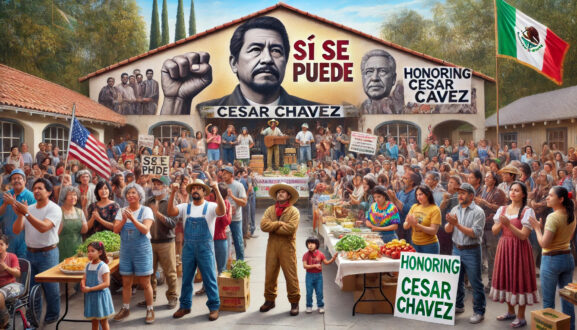

Nevada’s Cesar Chavez Day: Celebrating Legacy or Ignoring Allegations?
Nevada’s Cesar Chavez Day: Celebrating Legacy or Ignoring Allegations?
Each year, as March unfurls its golden hues across the Silver State, Nevada pauses to honor a man whose name resonates with the echoes of labor rights and social justice. Cesar Chavez Day, observed on March 31st, is more than a statutory holiday—it’s a cultural touchstone, a moment to reflect on the indomitable spirit of a farmworker turned civil rights icon. But beneath the ceremonial wreaths and heartfelt speeches, a question lingers, playful yet pointed: Is Nevada truly celebrating a legacy, or is it turning a blind eye to the allegations that shadowed his life’s work?
This dichotomy isn’t merely academic. It’s a tension that forces us to confront the complexities of heroism in an era where myth-making often overshadows nuance. Nevada, with its vibrant Latino communities and progressive labor policies, stands at a crossroads. How does a state reconcile the veneration of Chavez’s ideals with the uncomfortable truths that some whisper about his methods?
The Legacy of a Titan: A Beacon for Nevada’s Labor Movement
Cesar Chavez’s legacy in Nevada is etched into the very soil that once bore the weight of exploited farmworkers. His relentless advocacy for fair wages, humane working conditions, and unionization transformed the agricultural landscape of the state. The United Farm Workers (UFW) movement, which Chavez co-founded, left an indelible mark on Nevada’s labor laws, inspiring generations of activists to demand dignity in the fields.
In Nevada, where tourism and hospitality industries often overshadow agricultural labor, Chavez’s principles serve as a reminder that progress is not a privilege but a right. Schools, community centers, and even state offices host events that celebrate his life—mural dedications, documentary screenings, and panel discussions that extol his virtues. The narrative is clear: Chavez was a champion, a man who wielded nonviolence like a scalpel, cutting through the Gordian knot of systemic oppression.
Yet, this narrative, while inspiring, is not without its fissures. The passage of time has a way of softening edges, and in the glow of hagiography, inconvenient details can fade into obscurity. But Nevada’s celebration of Chavez’s legacy must reckon with the allegations that have simmered beneath the surface for decades.
The Shadow of Allegations: A Crack in the Monument
No figure of Chavez’s stature escapes scrutiny, and his legacy is no exception. Critics, often from within his own ranks, have leveled accusations that paint a less flattering portrait. Some former UFW members and labor historians allege that Chavez’s commitment to nonviolence was not as unwavering as history remembers. Reports of internal purges, authoritarian leadership, and even physical altercations within the UFW have surfaced, challenging the saintly image that has been meticulously constructed.
In Nevada, where the Latino community is a vital thread in the state’s social fabric, these allegations are not dismissed lightly. They force a reckoning: Can we celebrate a man whose methods may have been as flawed as his mission was noble? The question is not one of erasing history but of confronting it with unflinching honesty. Nevada’s observance of Cesar Chavez Day must navigate this tightrope, balancing reverence with critical reflection.
The state’s progressive leanings could serve as a model for how to engage with such complexities. By hosting forums that invite dialogue rather than dogma, Nevada can demonstrate that honoring a legacy does not require ignoring its shadows. The alternative—silence—risks reducing Chavez to a mere symbol, stripped of the humanity that makes his story compelling.
Nevada’s Role: A Microcosm of National Debates
Nevada’s approach to Cesar Chavez Day is not an isolated phenomenon. It mirrors broader national conversations about how societies memorialize their heroes. From Confederate statues to modern-day activists, the tension between veneration and critique is a constant. Nevada, with its diverse population and progressive policies, has the opportunity to lead by example.
The state’s educational institutions could play a pivotal role. By incorporating nuanced perspectives on Chavez’s life into curricula, Nevada can foster a generation that understands heroism as a spectrum, not a binary. Workshops that explore the UFW’s internal dynamics, alongside its triumphs, could provide students with a more holistic understanding of labor history.
Moreover, Nevada’s vibrant arts scene could serve as a canvas for this dialogue. Murals that depict Chavez’s legacy alongside the controversies, or plays that dramatize the complexities of his leadership, could transform public spaces into forums for debate. Art, after all, thrives on tension—it does not shy away from the uncomfortable.
Conclusion: A Day of Reckoning, Not Just Remembrance
As Nevada prepares to mark Cesar Chavez Day once again, the question lingers: Is this a celebration of a legacy, or a convenient omission of its flaws? The answer lies not in the grandeur of the ceremonies but in the sincerity of the introspection. A legacy is not diminished by scrutiny; it is enriched by it. By embracing the complexities of Chavez’s life, Nevada can transform a day of remembrance into a testament to the power of honest reflection.
In the end, the true measure of a hero is not the absence of flaws but the courage to confront them. Nevada has the chance to show that honoring a legacy does not require ignoring its shadows—it requires shining a light on them. And in that light, perhaps, we find not just a man, but a mirror.