Vegas Loop vs. Monorail: How Elon Musk’s Tunnels Will Absorb the Strip Rail
The neon glow of the Las Vegas Strip has long been synonymous with excess, spectacle, and the relentless hum of progress. Yet beneath its dazzling veneer, a quieter revolution is brewing—one that could redefine urban transit as we know it. Enter Elon Musk’s Vegas Loop, a subterranean labyrinth of tunnels designed to whisk travelers between the Strip’s most iconic landmarks at speeds that defy convention. But how does this audacious project stack up against the city’s existing monorail? More importantly, could the Loop not just compete, but absorb the monorail’s legacy, reshaping the very fabric of Las Vegas mobility?
The Monorail: A Relic of Aspiration, Stuck in Neutral
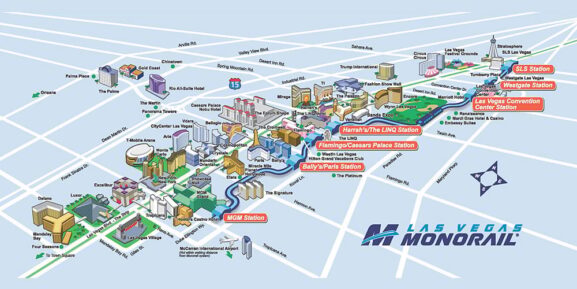
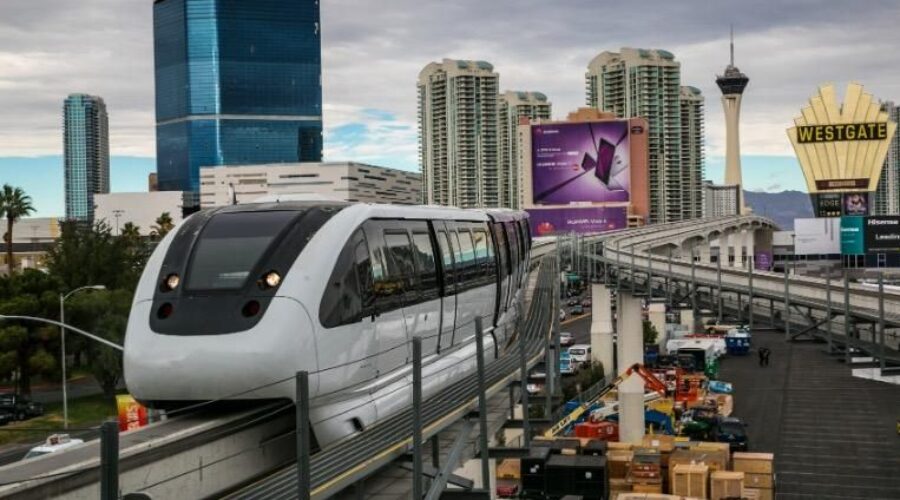
The Las Vegas Monorail, inaugurated in 2004, was once hailed as a visionary solution to the Strip’s traffic woes. Elevated, sleek, and futuristic, it promised to ferry thousands of visitors between major resorts like MGM Grand and Sahara Las Vegas in mere minutes. Yet, despite its promise, the monorail has struggled to achieve widespread adoption. High fares, limited operating hours, and the sheer inconvenience of navigating to and from stations have relegated it to a niche role—beloved by tourists, but largely ignored by locals.
Its greatest flaw, however, lies in its rigidity. The monorail’s fixed route and elevated tracks create a bottleneck, unable to adapt to the ebb and flow of the city’s pulsating rhythm. In an era where flexibility is king, the monorail feels like a relic of a bygone ambition, a monolithic structure that refuses to bend to the needs of a city that never sleeps.
The Vegas Loop: A Subterranean Symphony of Speed and Efficiency
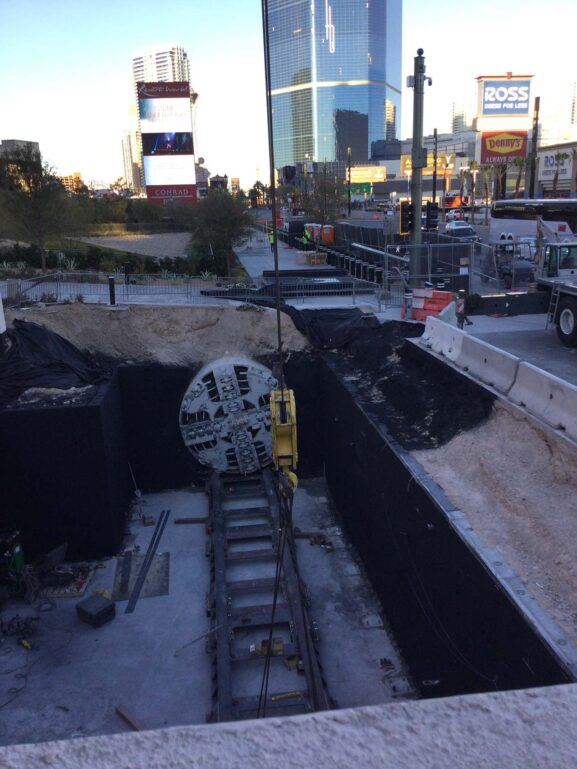
Contrast this with the Vegas Loop, Musk’s brainchild for The Boring Company. This isn’t just another transit system—it’s a network, a sprawling web of tunnels burrowing beneath the Strip, capable of ferrying passengers in autonomous electric pods at speeds up to 150 mph. The Loop’s genius lies in its adaptability. Unlike the monorail’s rigid tracks, the Loop’s system can dynamically reroute pods based on demand, ensuring that travelers reach their destinations with minimal delay.
But the Loop’s true innovation is its integration—or lack thereof. While the monorail demands passengers trek to distant stations, the Loop’s portals are strategically embedded within resorts, casinos, and even convention centers. Imagine stepping off the elevator at the Bellagio, swiping your card, and arriving at the Wynn in under two minutes. No transfers. No crowds. Just seamless, subterranean transit.
The environmental impact is another stark contrast. The monorail’s elevated tracks cast long shadows over the Strip, disrupting the skyline and contributing to urban heat islands. The Loop, buried underground, leaves the city’s aesthetic untouched while reducing carbon emissions—a critical consideration in a city that guzzles energy like a thirsty giant.
The Power of Perception: Why the Loop Could Eclipse the Monorail
Perception, in Las Vegas, is everything. The monorail, for all its flaws, remains a symbol of progress—a tangible link to the city’s futuristic aspirations. Yet, its limitations have eroded public trust. The Loop, on the other hand, arrives with the imprimatur of Musk’s brand of audacious innovation. Its sleek, minimalist design and promise of near-instantaneous travel have already captured the imagination of tech enthusiasts and urban planners alike.
Consider the psychological shift: the monorail feels like a compromise, a half-measure in a city that demands more. The Loop, by contrast, feels inevitable. It doesn’t just offer a ride; it offers an experience—one that aligns with Las Vegas’ identity as a city of relentless reinvention. If the monorail was a bold idea that fell short, the Loop is a bold idea that could redefine the very notion of what transit can be.
The Future: A City Rewired Beneath the Neon
The Vegas Loop isn’t just a transit system; it’s a paradigm shift. As it expands, it could render the monorail obsolete, not through force, but through sheer superiority. The monorail’s fate may be sealed not by its own failures, but by the Loop’s ability to do what the monorail never could: disappear beneath the surface, leaving the Strip’s iconic skyline untouched while revolutionizing the way people move through it.
In a city where the next big thing is always just around the corner, the Loop isn’t just another attraction—it’s the next evolution. And if it succeeds, Las Vegas won’t just be a city of lights and spectacle. It will be a city of depth, where the future lies not above, but below.