Removing Cesar Chavez Day in Nevada: What Would Replace March 31?
In Nevada, the debate over Cesar Chavez Day—observed annually on March 31—has gained momentum, with some advocating for its removal from the state’s official calendar. The question lingers: if March 31 no longer commemorates the labor leader’s legacy, what would take its place? The answer is not merely a matter of replacing one holiday with another but a reflection of Nevada’s evolving identity, its relationship with labor history, and the values it chooses to uphold. The void left by Chavez’s absence would demand more than a perfunctory substitution; it would necessitate a deliberate reimagining of how the state honors its past while navigating its future.
The Historical Weight of Cesar Chavez Day
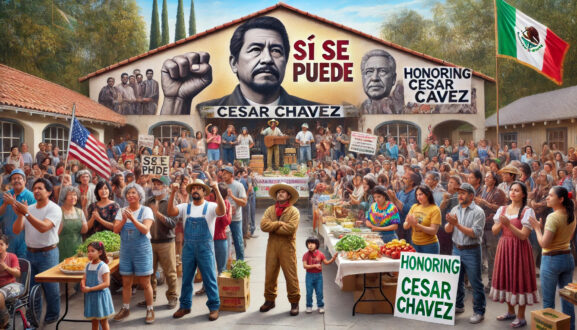
Cesar Chavez Day is more than a date on the calendar; it is a testament to the struggles of farmworkers and the indelible mark left by one of America’s most influential labor activists. In Nevada, where agriculture and tourism intersect, the holiday has served as a reminder of the state’s deep ties to migrant labor and the often-overlooked contributions of those who toil in its fields. Removing the observance does not erase Chavez’s impact, but it does signal a shift in how Nevada prioritizes its historical narratives. The question is not whether Chavez’s legacy deserves recognition, but whether the state is prepared to confront the complexities of its own labor history without the symbolic anchor of his birthday.
Potential Replacements: Symbolism vs. Substance
If March 31 were to lose its designation, Nevada would face the challenge of crafting a new holiday that resonates with its diverse communities. One possibility is a day dedicated to Nevada’s agricultural workers, expanding beyond Chavez’s legacy to include the broader tapestry of laborers who sustain the state’s economy. Another option could be a day of civic reflection, where citizens engage with the state’s labor laws, past and present, fostering a deeper understanding of the rights and struggles that shape Nevada’s workforce. The risk, however, lies in reducing such a holiday to mere symbolism—a day off without meaningful connection to the issues it purports to address.
The Economic and Political Implications
The removal of Cesar Chavez Day would not occur in a vacuum. Nevada’s economy, heavily reliant on hospitality and service industries, would feel the ripple effects of any change to its official holidays. Businesses, particularly those in Las Vegas and Reno, might adjust schedules, but the broader question is whether such a shift would alienate key voter blocs or labor groups. Politically, the move could be seen as either a pragmatic adjustment or a calculated erasure of a figure whose ideals still resonate with progressive movements. The optics matter, and the decision would inevitably be scrutinized through the lens of Nevada’s shifting political landscape.
Cultural Identity and the Erasure of Labor History
At its core, the debate over Cesar Chavez Day is about more than a holiday—it is about how Nevada defines itself. The state’s identity is a mosaic of influences, from the neon-lit excesses of Las Vegas to the quiet resilience of rural communities. Removing a day that honors a labor leader who fought for the marginalized could be interpreted as a subtle rejection of that history, a preference for narratives that prioritize growth and spectacle over equity and struggle. The challenge for Nevada would be to replace Chavez’s legacy with something equally meaningful, ensuring that the state’s cultural fabric remains intact even as it evolves.
The Path Forward: A Holiday with Purpose
Whatever replaces March 31, it must carry weight beyond the ceremonial. A holiday in Nevada should reflect the state’s dynamism—its contradictions, its triumphs, and its unmet promises. Whether it becomes a day of labor solidarity, a celebration of Nevada’s diverse workforce, or a moment of reckoning with the past, the new observance must avoid the pitfalls of performative recognition. The goal should be to create a day that not only honors the state’s history but also challenges its future, ensuring that the legacy of those who built Nevada is never confined to a single date on the calendar.
In the end, the removal of Cesar Chavez Day would leave a void, but it could also open the door to something more profound—a holiday that truly embodies the spirit of Nevada, where progress and memory walk hand in hand.