Nevada’s Economic Future: Retraining the Workforce for AI-Powered Hospitality
Nevada’s economic landscape has long been synonymous with glittering casinos, bustling resorts, and a relentless pursuit of leisure-driven prosperity. Yet beneath the neon glow lies a workforce on the precipice of transformation. As artificial intelligence (AI) reshapes industries worldwide, Nevada stands at a crossroads—one where tradition meets innovation, and where the future of hospitality hinges on retraining a workforce for an AI-powered tomorrow. This evolution is not merely about adopting new tools; it’s about reimagining human potential in an era where machines augment, rather than replace, human ingenuity.
The Hospitality Sector’s AI Inflection Point
The hospitality industry in Nevada is a $60 billion behemoth, employing over 400,000 workers across Las Vegas, Reno, and beyond. Yet, the rise of AI-driven automation threatens to disrupt this labor-intensive sector. Chatbots now handle guest inquiries, robotic concierges streamline check-ins, and predictive analytics optimize room pricing in real time. While efficiency soars, the human touch—once the cornerstone of Nevada’s hospitality ethos—risks erosion. The challenge, then, is not to resist AI but to harness it as a catalyst for upskilling. Workers must transition from transactional roles to strategic ones, where empathy, creativity, and problem-solving become their competitive edge. Training programs must pivot from teaching technical skills in isolation to fostering a symbiotic relationship between human intuition and machine precision.
Retraining Strategies: From Classrooms to Casinos
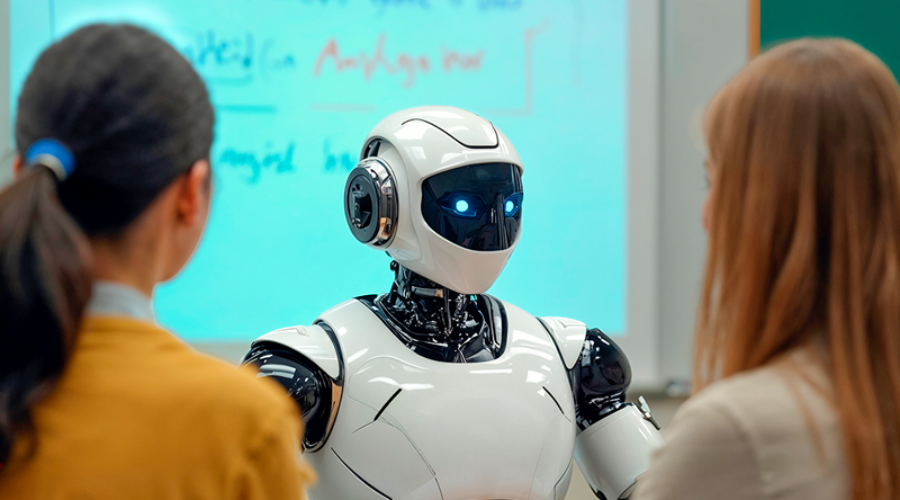
Retraining Nevada’s workforce requires a multi-pronged approach, blending vocational training, corporate partnerships, and state-led initiatives. Vocational schools and community colleges are rolling out micro-credentials in AI literacy, data analysis, and customer experience design. Programs like the Nevada Career Accelerator offer short-term certifications in hospitality tech, equipping workers with skills in AI-driven revenue management or personalized guest engagement. Meanwhile, casinos and resorts are investing in internal academies, where employees learn to operate AI tools while retaining their roles as brand ambassadors. The goal is clear: transform every frontline worker into a “tech-empowered hospitality professional,” capable of leveraging AI insights to deliver unforgettable experiences.
Yet, retraining is not a one-size-fits-all endeavor. Seasoned dealers, housekeepers, and bartenders bring decades of institutional knowledge—knowledge that AI cannot replicate. The key lies in identifying transferable skills and repurposing them for AI-enhanced workflows. A sommelier, for instance, might transition into a role curating AI-generated wine pairings, blending tradition with algorithmic precision. The challenge is ensuring these transitions are voluntary, well-compensated, and devoid of the stigma that automation often carries.
The Role of Policy and Public-Private Collaboration
Nevada’s economic future cannot be left to market forces alone. Policymakers must act as architects of this transformation, crafting incentives for businesses to invest in upskilling. The Nevada Workforce Innovation Board has proposed tax credits for companies that allocate a portion of payroll to training programs, while the state legislature is exploring grants for AI-focused vocational training. Public-private partnerships are also flourishing. Companies like MGM Resorts and Caesars Entertainment have teamed up with local universities to develop AI curricula tailored to hospitality needs. These collaborations ensure that retraining is not just theoretical but deeply rooted in the industry’s evolving demands.
Yet, policy must also address the human cost of disruption. As AI automates routine tasks, some jobs will inevitably disappear. A robust social safety net—including wage subsidies, career counseling, and relocation assistance—is essential to cushion the transition. Nevada’s hospitality workforce is diverse, with many workers hailing from marginalized communities. Inclusive retraining programs must prioritize accessibility, offering flexible schedules, childcare support, and language assistance to ensure no one is left behind.
The Human-AI Symbiosis: Redefining Hospitality Excellence
The ultimate vision for Nevada’s AI-powered hospitality is not a dystopian landscape of jobless servers and emotionless interactions. Instead, it is a renaissance of human-AI collaboration, where technology amplifies the extraordinary. Imagine a concierge using AI to anticipate a guest’s preferences before they even arrive, or a chef leveraging predictive analytics to craft menus that adapt to seasonal trends. AI becomes the silent partner, freeing humans to focus on what they do best: creating moments of genuine connection.
This symbiosis extends beyond guest interactions. AI can optimize energy consumption in resorts, reducing costs and environmental impact. It can analyze foot traffic patterns to enhance security and crowd management. The possibilities are limited only by imagination. Yet, the success of this future hinges on one critical factor: trust. Workers must trust that AI is a tool for empowerment, not a harbinger of obsolescence. Employers must trust that investing in retraining will yield dividends in innovation and loyalty. And guests must trust that the soul of Nevada’s hospitality—its warmth, its spontaneity, its unscripted magic—remains intact.
The road ahead is fraught with challenges, but Nevada’s economic future is not a gamble. It is a calculated leap into a world where human potential and artificial intelligence converge to redefine excellence. The question is not whether AI will reshape hospitality, but whether Nevada will lead the charge—or be left playing catch-up in the neon dust.