Will Nevada Ever Legalize Prediction Markets? The Kalshi TV Paradox Suggests Yes
In the cloistered pantheon of American gaming, Nevada stands as the high priest of regulated chance, zealously guarding its sacraments of blackjack, slots, and sports wagering. Yet an apostasy is stirring at its digital borders: prediction markets, those sui generis bourses where participants trade event contracts on everything from election outcomes to the next Fed rate hike. The recent emergence of Kalshi TV—a live stream broadcasting real-time market odds as entertainment—has created a paradox that may finally pry open the state’s gilded gates. The question of whether Nevada will ever legalize these novel risk exchanges now seems less a matter of if and more a puzzle of when.
The Nevada Gaming Fortress
To understand the current interdict, one must appreciate Nevada’s regulatory orthodoxy. Since 1931, the state has constructed an intricate armature of licensing, enforcement, and taxation that treats gambling as a privileged monopoly, a hermetically sealed system where every chip, every wager, and every house edge is catalogued. Event-based prediction markets—platforms like Kalshi and Polymarket—fall into a gray chasm. The Nevada Gaming Control Board views them as unlicensed sports pools or, at best, an illicit form of bookmaking, because they allow individuals to buy and sell shares tied to discrete future occurrences. Even though the Commodity Futures Trading Commission (CFTC) has sanctioned certain event contracts as derivatives, Nevada’s parochial jurisdiction refuses to acknowledge this financial aegis. For decades, the fortress walls have held, but a media phenomenon is now lobbing paradox over the ramparts.
The Advent of Prediction Markets
Prediction markets operate on the principle of crowd wisdom, coalescing disparate information into a single probabilistic price. Instead of betting against a bookmaker, traders take opposing sides on whether an event will occur, with payouts structured like binary options. Kalshi, the first CFTC-regulated exchange to fully embrace this model, offers contracts on topics ranging from weather statistics to political milestones. Proponents argue these are not wagers but instruments of financial hedging and information discovery. Nevada, however, remains recalcitrant, treating any instrument that pays out based on a real-world event as a gambling product requiring a license. This doctrinal schism has created an interregnum where residents can watch national television pundits discuss Kalshi’s odds but cannot legally click to participate.
The Kalshi TV Paradox
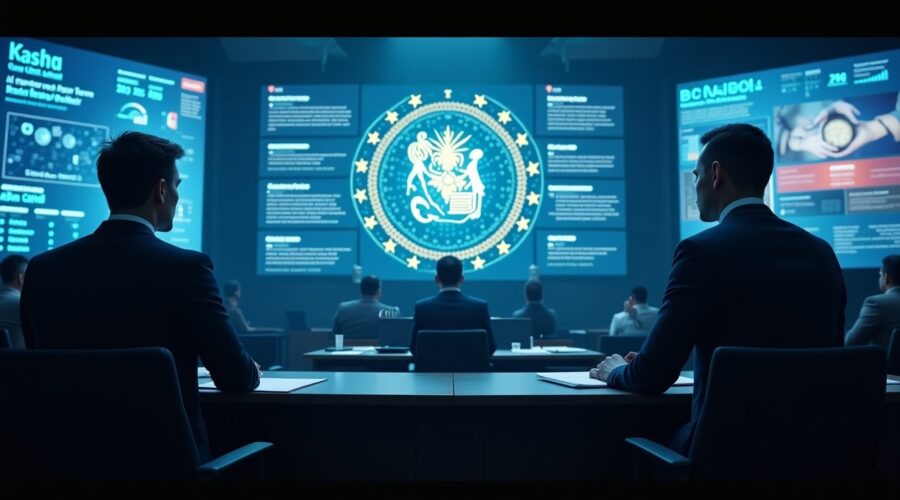
Kalshi TV transforms this tension into a tangible conundrum. The streaming channel broadcasts a continuous ticker of live contract prices, interspersed with commentary and analysis, mirroring the cadence of ESPN’s SportsCenter but for election margins and inflation prints. It effectively turns a restricted betting market into ambient mass media. Nevada residents can freely view that a contract for “Trump wins the popular vote” is trading at 42 cents, yet state law forbids them from buying that contract. This paradox of permitted information and prohibited participation erodes the logical substrate of the ban. It highlights a quixotic reality: the same data that fuels speculative fervor is available on a smart TV in a Las Vegas penthouse, making the prohibition appear increasingly arbitrary. Regulators are not blind to the irony. They recognize that banning the transaction while allowing the signal is like outlawing wine but selling corkscrews.
Regulatory Riptides and Economic Incentives
Nevada’s economic anatomy is hypersensitive to revenue. The state collects a substantial vig from every legal wager, and the potential taxation of prediction market trading represents a new lode of fiscal ore. The paradox of Kalshi TV acts as a catalyst, prodding gaming commissioners to consider a syncretism between financial regulation and traditional casino oversight. Lawmakers could craft a bespoke framework where prediction market operators pay a licensing fee, submit to state audits, and offer consumer protections akin to those in sportsbooks. Already, discussions percolate in Carson City about modernizing the definition of “gambling device” to encompass digital event exchanges, replacing outright prohibition with calibrated permission. The allure of capturing a piece of a global market that has processed billions in political contracts is too intoxicating to ignore indefinitely.
The Road Ahead
The trajectory points toward a gradual rapprochement. Nevada’s gaming industry has a long history of co-opting innovations that once seemed heretical—off-track betting, mobile wagering, and live in-game props all traversed a path from anathema to mainstream. Kalshi TV, by turning forbidden odds into everyday wallpaper, is accelerating that cycle. The paradox it presents strips the prohibition of its practical legitimacy, setting the stage for a legislative session where prediction markets are no longer debated as a criminal enterprise but as a licensable asset class. The final shape will likely be hybrid: Nevada could require exchanges to partner with existing casino licensees, melding the digital agora with the physical casino floor. The state that once built a city on the audacity of chance will, in all probability, extend its embrace to the next iteration of speculative fever.