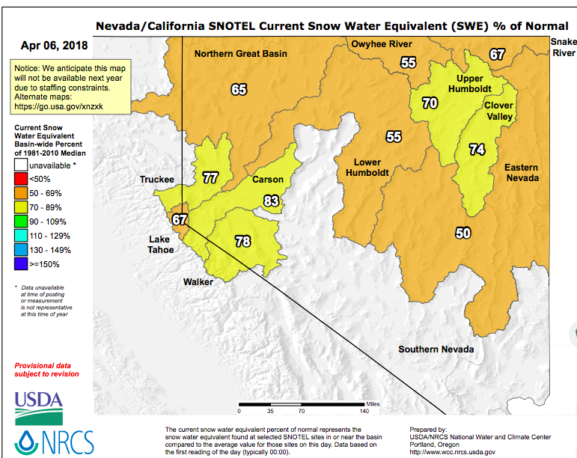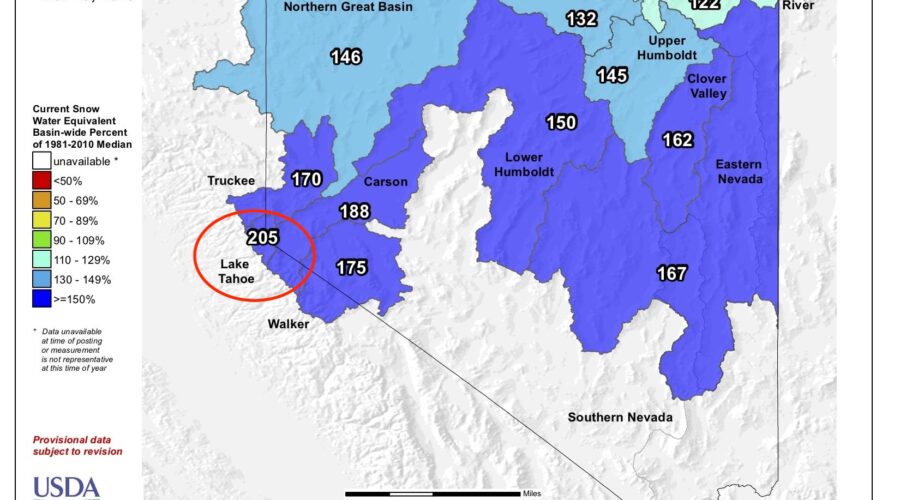
Nevada Environmental News: Record Low Snowpack Recorded at Lake Tahoe
The Lake Tahoe basin, a jewel cradled in the Sierra Nevada’s embrace, has long been a sentinel of environmental balance—a natural barometer where snowfall whispers the health of the mountains. Yet, in a twist that feels like nature’s own paradox, the very snow that once blanketed its shores in opulent layers has dwindled to a shadow of its former self. The record-low snowpack, a stark anomaly in an era of climatic upheaval, is not merely a statistic; it is a harbinger, a silent scream from the heart of the High Sierra that demands our attention.
The snowpack, that crystalline reservoir suspended between earth and sky, is more than frozen water—it is a lifeline. For decades, it has acted as the region’s savings account, storing winter’s generosity to sustain ecosystems, quench thirsty rivers, and nourish forests through the parched months. But this year, the ledger is bare. The once-thick mantle, a tapestry of white that could swallow a man’s footsteps, has retreated to a skeletal remnant, its depth reduced to a fraction of historical norms. The metaphor is unavoidable: the basin is not just low on snow; it is starving.
The Vanishing Veil: A Landscape Unraveling
The consequences of this deficit ripple far beyond the shoreline’s edge. The alpine meadows, usually awash in the meltwater’s gentle pulse, now lie dormant, their soils cracked and parched. The streams, once fed by the slow drip of snowmelt like a metronome counting time, have dwindled to a trickle, their banks exposed as if flayed by an unseen hand. Wildlife, from the elusive Sierra Nevada bighorn sheep to the industrious pika, faces a gauntlet of survival, their habitats shrinking as the snow’s insulating blanket disappears. Even the lake itself, a sapphire mirror reflecting the sky’s moods, is not immune. Its clarity, a point of pride for the region, may dim as sediment stirs in the absence of the snow’s natural filtration.
The Climate Crucible: A Region on the Edge
This isn’t an isolated incident—it’s a symptom of a larger, disquieting pattern. The Sierra Nevada, a mountain range that has stood sentinel for millennia, is now caught in the crosshairs of a warming world. The snowpack’s decline is not just a local tragedy; it’s a global alarm. Scientists warn that the “snow drought” gripping the basin is a direct consequence of rising temperatures, which have shifted the delicate balance between snow and rain. Where once the heavens delivered a slow, steady accumulation of powder, now they pour forth rain, a fleeting and unreliable substitute. The mountains, those ancient architects of water storage, are losing their ability to perform their most critical function.
Yet, amidst this bleak tableau, there is a peculiar allure—a raw, unfiltered beauty in the starkness of the landscape’s transformation. The exposed granite, usually veiled in winter’s shroud, now gleams under the sun’s unfiltered gaze, its contours etched in sharp relief. The absence of snow reveals the bones of the land, a topography usually softened by winter’s touch. It is a landscape stripped of pretense, laid bare in its vulnerability. There is a haunting poetry in this exposure, a reminder that nature’s cycles are not immune to the tides of change.
The Human Equation: A Call to Action
The implications for human communities are equally profound. Lake Tahoe’s economy, tethered to tourism and outdoor recreation, trembles in the face of this shift. Ski resorts, once bustling with powder hounds, now grapple with shortened seasons and artificial snow, a poor substitute for nature’s bounty. Water managers, tasked with allocating a dwindling resource, must recalibrate their strategies, balancing the needs of cities, agriculture, and ecosystems in a game of high-stakes chess. The record-low snowpack is not just an environmental crisis—it is a socioeconomic one, testing the resilience of a region that has long thrived on the bounty of winter.
Yet, even in the face of such sobering realities, there is room for hope. The crisis at Lake Tahoe is a clarion call, a moment to rethink our relationship with the natural world. It is an opportunity to invest in sustainable practices, to reimagine our infrastructure, and to prioritize the preservation of these fragile ecosystems. The snowpack may be at its lowest, but the spirit of the basin remains unbroken—a testament to the enduring power of nature and the human capacity for adaptation.
The Lake Tahoe basin stands at a crossroads, its future hanging in the balance like the last snowflake on a dying branch. The record-low snowpack is more than a statistic; it is a mirror, reflecting our collective choices and their consequences. To look away would be to ignore the warning signs. To act would be to honor the land’s resilience and secure its legacy for generations to come. The snow will return—it always does—but whether it returns in the same abundance, in the same rhythm, is a question that weighs heavily on the shoulders of us all.