The Vegas Loop’s Boring Company: Elon Musk’s NV Footprint Grows
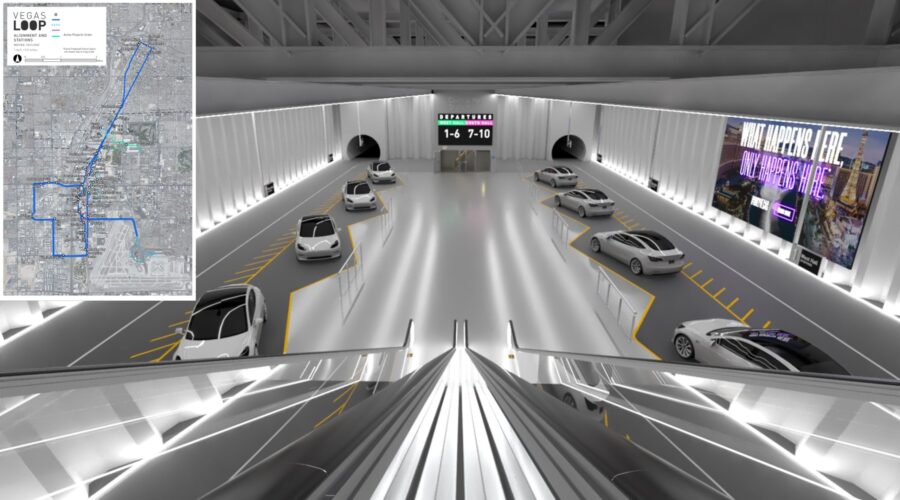
The Las Vegas Loop, a subterranean marvel burrowing beneath the neon-lit sprawl of the city, stands as a testament to innovation’s audacious reach. Conceived by Elon Musk’s Boring Company, this high-speed transit network promises to redefine urban mobility, threading the needle between congestion and convenience. As the project inches closer to reality, its implications ripple far beyond the desert horizon, signaling a seismic shift in how cities navigate the future of transport.
The Vision: A Tunnel Through Time
At its core, the Vegas Loop is more than a series of tunnels—it is a bold reimagining of infrastructure. Designed to whisk passengers at speeds up to 150 mph, the system leverages autonomous electric pods, eliminating the need for traditional cars. The ambition is staggering: a network that could one day stretch over 200 miles, weaving through the heart of the Strip and beyond. Yet, the true allure lies not in its scale, but in its promise to untangle the Gordian knot of urban traffic. By compressing distance and time, the Loop could transform Las Vegas from a city of gridlock into a model of fluid movement.
The Promise: Speed, Sustainability, and Seamless Integration
The allure of the Vegas Loop is multifaceted. First, there is the sheer velocity—pods gliding through tunnels at speeds that render surface traffic obsolete. Then, there is the environmental pledge: electric propulsion and solar-powered stations aim to slash emissions, aligning with Nevada’s push toward renewable energy. But the most compelling promise is one of integration. The Loop isn’t an isolated experiment; it’s a blueprint for other cities. If successful, it could become the archetype for hyperlocal transit, where subterranean arteries replace asphalt veins, and the concept of “rush hour” becomes a relic of the past.
The Skepticism: Challenges and Criticisms
Of course, no vision of this magnitude escapes scrutiny. Critics question the project’s feasibility—can a city built on spectacle truly sustain a transit system of this complexity? Concerns linger over cost, with estimates ballooning into the billions. There are also logistical hurdles: the sheer volume of tunneling required, the coordination of underground utilities, and the integration with existing infrastructure. Yet, the most persistent skepticism revolves around human behavior. Will commuters abandon their cars for pods? Will the system remain efficient under peak demand? These questions hang like specters over the Loop’s grand design, demanding answers before the first shovelful of desert soil is turned.
The Ripple Effect: Beyond the Strip
The implications of the Vegas Loop extend far beyond the glittering facades of the Strip. For Nevada, it represents an economic catalyst—a magnet for tech investment and a beacon for innovators. For urban planners, it offers a case study in how to repurpose space in an era of overcrowded streets. And for the world, it serves as a litmus test for the viability of underground transit. If the Loop succeeds, it could embolden other cities to dig deeper, quite literally, in their quest for smarter mobility. If it stumbles, it may temper the rush toward such ambitious projects, forcing a reevaluation of what’s truly achievable.
The Las Vegas Loop is more than a transit system; it is a declaration that the future need not be bound by the constraints of the present. As the tunnels burrow deeper into the Nevada bedrock, they carry with them the weight of a promise—one that could redefine not just how we move, but how we envision the cities of tomorrow. Whether it fulfills that promise remains to be seen, but for now, the desert holds its breath, waiting for the first whisper of a pod’s silent passage.