The 6.6% Question: Is Nevada’s Gaming Slowdown Temporary?
The 6.6% Question: Is Nevada’s Gaming Slowdown Temporary?
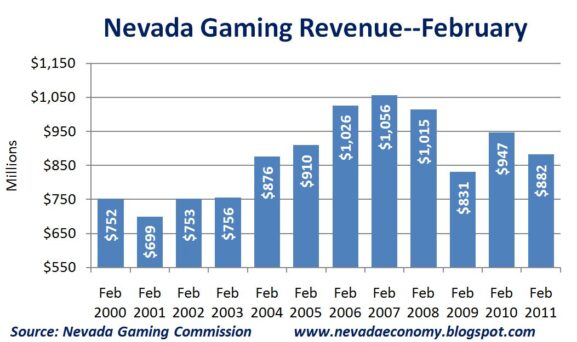
In the neon-lit sprawl of Las Vegas, where fortunes are made and lost in the blink of a roulette wheel, the gaming industry has long been the heartbeat of the state’s economy. But beneath the dazzling spectacle of slot machines and high-stakes poker tables, a subtle tremor has begun to ripple through the sector. Nevada’s gaming revenues, a barometer of economic vitality, dipped by 6.6% in the last quarter—a figure that has sent ripples of concern through boardrooms and government offices alike. Is this a fleeting hiccup in an otherwise unyielding upward trajectory, or the first tremor of a seismic shift in the industry’s foundation?
The answer, as with most things in the world of chance, is not black and white. To understand the 6.6% question, we must first dissect the forces at play. Nevada’s gaming landscape is a complex ecosystem, where the fortunes of casinos are intertwined with tourism trends, economic cycles, and the ever-evolving preferences of a global audience. The slowdown, while notable, is not an isolated incident. It mirrors broader trends in consumer behavior, where the allure of digital entertainment competes with the tactile thrill of a casino floor. The question then becomes: Is this a temporary pause in a marathon, or a sign that the race itself is changing?
The House Always Wins—or Does It?
At the heart of Nevada’s gaming industry lies a paradox: the house, by design, is meant to win. Yet, the 6.6% dip suggests that the house may be losing its grip on the narrative. One theory points to the rise of alternative entertainment options. The modern consumer, armed with smartphones and streaming services, is no longer tethered to the casino floor. The allure of a curated Netflix binge or a TikTok scroll session competes directly with the clatter of dice and the hum of slot machines. Casinos, once the undisputed kings of leisure, now find themselves in a battle for attention—a battle where the odds are not in their favor.
Another factor is the shifting demographics of Nevada’s tourist base. The traditional high-roller from Asia or the Midwest is being joined—or replaced—by younger, more budget-conscious travelers. These visitors are less interested in high-stakes gambling and more drawn to experiences: immersive shows, celebrity chef restaurants, and Instagram-worthy attractions. The gaming floor, once the centerpiece of the casino experience, is now just one of many attractions vying for a share of the visitor’s wallet. The 6.6% dip may well be a reflection of this evolving landscape, where the casino is no longer the main event.
The House of Cards: Economic and Regulatory Pressures
Beyond consumer trends, Nevada’s gaming industry is also grappling with external pressures. The post-pandemic economic recovery has been uneven, with inflation and rising costs squeezing both operators and patrons. Labor shortages, a lingering hangover from the pandemic, have forced casinos to raise wages, further eroding profit margins. Meanwhile, regulatory changes—both in Nevada and abroad—are tightening the screws on an industry already operating in a high-stakes environment.
Consider the crackdown on sports betting advertisements, a move aimed at curbing problem gambling. While laudable in its intent, such regulations can dampen the industry’s marketing efforts, making it harder to attract new customers. Similarly, the rise of online gaming platforms has blurred the lines between traditional and digital gambling, creating a new frontier that Nevada’s brick-and-mortar casinos are still learning to navigate. The 6.6% dip may be a symptom of these growing pains, a sign that the industry is struggling to adapt to a rapidly changing world.
The Phoenix Gambit: Can Nevada Reinvent Itself?
Yet, to focus solely on the slowdown is to ignore the resilience that has defined Nevada’s gaming industry for decades. The state has weathered economic downturns, regulatory upheavals, and even existential threats—such as the rise of online poker in the early 2000s—and emerged stronger each time. The key to its survival may lie in its ability to reinvent itself, to transform the casino from a mere gambling den into a multifaceted entertainment hub.
Already, we see glimmers of this evolution. Casinos are doubling down on non-gaming amenities, from luxury spas to world-class entertainment venues. The integration of technology, from cashless payment systems to AI-driven customer service, is streamlining operations and enhancing the guest experience. Even the gaming floor itself is undergoing a metamorphosis, with immersive themes and interactive games designed to captivate a new generation of visitors.
The 6.6% question, then, may not be about decline but about transformation. The slowdown could be the catalyst for a much-needed evolution, a chance for Nevada to shed its outdated image and embrace a future where the casino is more than just a place to roll the dice. The question is not whether the slowdown is temporary, but whether Nevada’s gaming industry is ready to bet on its own reinvention.
In the end, the house may still win—but only if it’s willing to play a different game.