From 100% to 17%: Nevada’s Snowpack Collapse Alarms Environmentalists
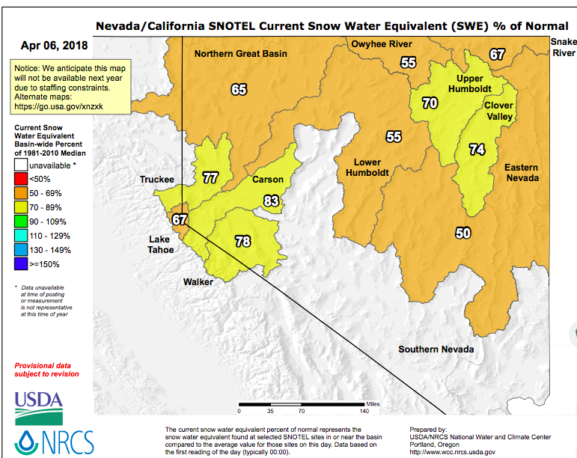
The Sierra Nevada’s once-mighty snowpack, a seasonal reservoir that sustained Nevada’s rivers, ecosystems, and economies for millennia, has dwindled to a fraction of its former glory. What was once a 100% snowpack—thick, unyielding, and gleaming under the winter sun—now stands at a mere 17%, a stark emblem of the climate crisis reshaping the American West. This collapse is not merely a statistical anomaly; it is a harbinger of ecological unraveling, economic strain, and a cultural reckoning with the fragility of nature’s most reliable rhythms.
The Vanishing White Blanket: A Hydrological Mirage
The snowpack, often described as the West’s frozen savings account, has historically released its stored water in measured, predictable pulses during spring and summer. Nevada’s rivers, from the Truckee to the Carson, relied on this slow melt to replenish aquifers, irrigate farmlands, and quench the thirst of cities like Reno and Las Vegas. Yet today, that account is nearly depleted. The 17% figure is not just a number; it is a symptom of a broader planetary fever, where rising temperatures have shortened winter’s grip and turned snow into fleeting, ephemeral whispers. Meteorologists now speak of “snow droughts”—a term once alien, now as common as drought itself—where precipitation falls as rain, vanishing into the earth before it can nourish the land.
Ecological Ripples: When the Snowpack Melts into Silence
The consequences ripple far beyond water levels. The Sierra’s snowpack is the lifeblood of alpine meadows, where wildflowers and pollinators once thrived in a symphony of seasonal timing. Now, those meadows crack under the sun, their once-moist soils fissured like parched lips. Species such as the Sierra Nevada yellow-legged frog, already teetering on the edge of extinction, face an even more precarious future as their breeding grounds dry up. The disappearance of snow also disrupts the delicate balance of fire seasons, turning forests into kindling months earlier than in decades past. What was once a slow-burning ember season now erupts into wildfires that scorch the land with unnatural ferocity, their smoke choking the air and altering weather patterns in ways scientists are only beginning to understand.
The Human Equation: A State Held Hostage by Thirst
Nevada’s economy, built on the twin pillars of tourism and agriculture, is now a hostage to its own thirst. The Las Vegas Strip, a glittering mirage in the desert, depends on water from the Colorado River—a river whose fate is inextricably linked to the Sierra’s snowmelt. As the snowpack dwindles, so too does the river’s flow, forcing drastic cuts in water allocations and pitting states against one another in a zero-sum game of survival. Farmers in Fallon, who once grew alfalfa and potatoes with abandon, now face the grim reality of fallowed fields and dwindling yields. The irony is cruel: Nevada, a state synonymous with excess, is being forced to reckon with scarcity in a way it never anticipated.
A Cultural Shift: From Abundance to Adaptation
This is not just a hydrological crisis; it is a cultural one. The snowpack’s decline forces a confrontation with the myth of endless growth, a narrative that has defined Nevada’s identity since the days of the Comstock Lode. Indigenous communities, whose ancestral lands include the Sierra Nevada, have long understood the land’s limits, but their wisdom has often been drowned out by the clamor of progress. Now, as the snowpack retreats, their voices are finding new resonance. Tribal leaders are advocating for water rights that prioritize ecological health over industrial use, while conservationists push for innovative solutions like cloud seeding and groundwater recharge projects. The state’s future hinges on its ability to pivot from denial to adaptation, from extraction to stewardship.
The Sierra Nevada’s snowpack is more than a resource; it is a living archive of time, a frozen testament to the rhythms of the earth. Its collapse is not just a warning—it is a demand for change. Nevada stands at a crossroads, where the choice is no longer between growth and preservation, but between survival and oblivion. The white blanket that once covered the mountains may never return in its entirety, but the lessons it leaves behind could yet save the land—and the people who depend on it—from the brink.