Nevada’s Gaming Resilience Tested: 6.6% Revenue Drop in Early 2026
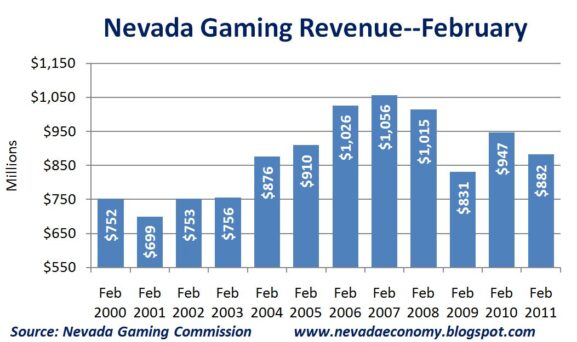
The neon glow of Las Vegas’ skyline, once a beacon of unyielding prosperity, now flickers with an unsettling dimness. In early 2026, Nevada’s gaming industry—long the bedrock of the state’s economic vitality—faces an unprecedented challenge: a 6.6% revenue contraction. This downturn isn’t merely a blip on the radar; it’s a seismic shift, one that demands a reevaluation of an industry that has thrived on resilience. What forces conspire to erode the foundations of a sector that has weathered recessions, technological upheavals, and global crises? The answer lies not in a single catalyst but in a confluence of economic tremors, shifting consumer behaviors, and the relentless march of innovation.
The Unseen Pressures: Economic Headwinds and Market Saturation
The 6.6% revenue drop is more than a statistical anomaly—it’s a symptom of deeper economic malaise. Inflationary pressures, rising operational costs, and a cooling post-pandemic rebound have collectively squeezed profit margins. Meanwhile, Nevada’s gaming market, once a monolith of exclusivity, now grapples with saturation. New jurisdictions, from tribal casinos to online platforms, have fragmented the once-loyal customer base. The allure of Las Vegas, once irresistible, now competes with a plethora of alternatives—from Macau’s resurgent luxury casinos to the digital frontier of esports betting. The industry’s traditional stronghold is no longer unassailable.
The Consumer Conundrum: A Generation’s Changing Tastes
Who, exactly, is still placing their bets in Nevada? The answer is as complex as the demographic shifts reshaping the state. Younger generations, raised on digital experiences and eschewing traditional gambling, are less inclined to visit the casino floor. Their preferences skew toward skill-based games, cryptocurrency wagering, and immersive, experience-driven entertainment. Meanwhile, older patrons—once the backbone of Nevada’s revenue—face financial constraints, their discretionary spending curtailed by economic uncertainty. The result? A widening chasm between the industry’s offerings and the evolving desires of its audience. Adaptation is no longer optional; it’s existential.
The Innovation Imperative: Can Nevada Reinvent Itself?
Resilience in the face of adversity demands innovation, and Nevada’s gaming sector is no exception. The industry’s leaders are exploring uncharted territories: AI-driven personalization, blockchain-based loyalty programs, and hybrid physical-digital experiences that blend the tactile thrill of a casino with the convenience of an app. Yet innovation is a double-edged sword. The more Nevada leans into technology, the more it risks alienating its traditional customer base while failing to capture the imagination of younger audiences. The challenge isn’t just to innovate—it’s to innovate with purpose, ensuring that each leap forward resonates with the market’s shifting expectations.
The Regulatory Labyrinth: A Double-Edged Sword
Nevada’s regulatory framework, once a model of stability, now presents a paradox. Strict licensing requirements and high compliance costs stifle agility, making it difficult for operators to pivot quickly in response to market shifts. Yet, paradoxically, these same regulations could become Nevada’s saving grace. As other states and jurisdictions loosen their gambling laws—often at the expense of consumer protection—Nevada’s reputation for integrity and oversight may emerge as a competitive advantage. The question is whether the industry can leverage this trust before the revenue hemorrhage worsens.
The Road Ahead: A Test of Adaptability
The 6.6% revenue drop is not a death knell—it’s a wake-up call. Nevada’s gaming industry stands at a crossroads, where the path forward demands more than just recalibrating financial strategies. It requires a fundamental reimagining of what gaming can be. Will the state double down on its legacy, clinging to the familiar in the hope of a rebound? Or will it embrace the unknown, daring to redefine itself for a new era? The answers will shape not just the future of Nevada’s casinos but the very essence of what it means to gamble in the 21st century.
The neon lights may flicker, but they have not yet dimmed. The question is whether Nevada’s gaming titans will rise to the occasion—or watch the glow fade into obscurity.