How AI Will Create New Jobs in Nevada Even as 90000 Disappear
In the neon-lit sprawl of Las Vegas, where slot machines hum like mechanical choirs and the desert wind carries whispers of fortune, Nevada stands at the precipice of a paradox. While economists warn of 90,000 jobs vanishing beneath the relentless march of automation, a quieter revolution is unfolding—one that promises to rewrite the state’s economic DNA. Artificial intelligence, often cast as the harbinger of obsolescence, is not merely a disruptor; it is an architect of opportunity, sculpting roles that blend human ingenuity with machine precision. The question is not whether AI will hollow out Nevada’s workforce, but how it will reshape it into something far more dynamic.
The Alchemy of Disruption: Where Jobs Dissolve, New Alloys Form
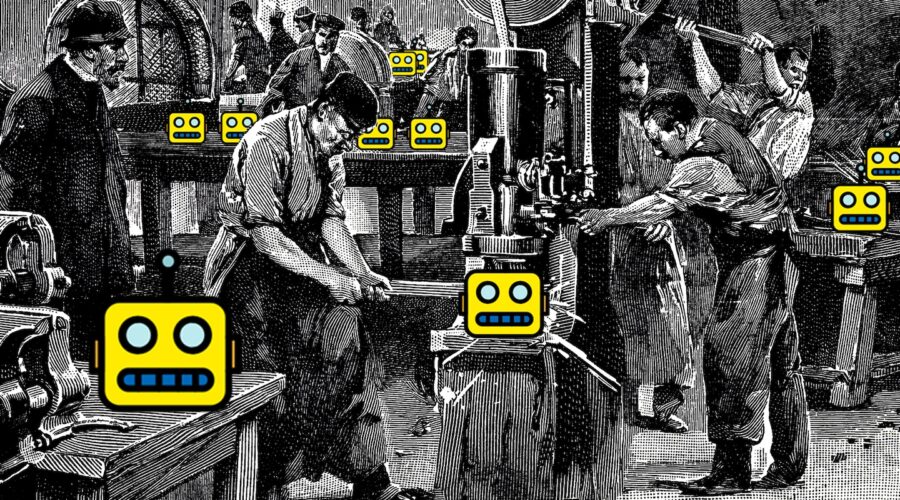
The specter of job displacement is undeniable. Truckers, casino dealers, and even paralegals—roles once considered untouchable—are being redefined by algorithms capable of processing data faster than the human mind. Yet, history has shown that technological upheaval rarely ends in ruin; it merely recalibrates the landscape. The Industrial Revolution didn’t eradicate labor—it birthed factory foremen, safety inspectors, and logistics coordinators. Similarly, AI’s incursion into Nevada’s economy will not signal an end, but a metamorphosis.
Consider the burgeoning field of “AI curation.” As casinos and resorts deploy machine learning to personalize guest experiences, a new cadre of “experience architects” will emerge—professionals who blend data science with hospitality to craft bespoke journeys. These roles will demand a rare fusion of creativity and analytical prowess, turning raw data into emotional resonance. The same AI that threatens to replace a blackjack dealer could, in turn, create a role for a “gaming ethicist,” tasked with ensuring that algorithmic fairness doesn’t erode the human touch that defines Nevada’s allure.
The Rise of the “Augmented Worker”: Bridging the Chasm Between Man and Machine
Nevada’s workforce is not passive in this evolution. The state’s proximity to Silicon Valley and its burgeoning tech hubs in Reno and Las Vegas position it as a testing ground for “augmented labor”—a paradigm where humans and AI collaborate, not compete. Take the role of a “drone traffic controller,” a position that didn’t exist a decade ago but is now essential as autonomous aerial vehicles navigate the skies above the Strip, delivering amenities or monitoring security.
Even in traditional sectors, AI is not a usurper but a collaborator. In mining, for instance, autonomous haul trucks already traverse the Nevada desert, but they require human overseers to interpret geological anomalies or respond to emergencies. These overseers are not mere button-pushers; they are “automation liaisons,” bridging the gap between silicon-based decision-making and the nuanced judgment of human experience. The jobs that survive—and thrive—will be those that embrace this hybridity, where intuition and algorithmic precision coexist.
The Unseen Infrastructure: Jobs Behind the AI Curtain
Behind every AI system lies a hidden workforce—engineers, ethicists, and trainers who ensure these tools function not just efficiently, but ethically. Nevada’s burgeoning AI sector will spawn roles like “bias auditors,” professionals who scrutinize algorithms for discriminatory patterns, or “AI explainability specialists,” who translate the opaque decisions of machine learning into human-understandable terms. These are not peripheral jobs; they are the scaffolding of trust in an automated world.
Consider the rise of “synthetic content creators,” artists and writers who collaborate with AI to produce hyper-personalized entertainment. In a state where spectacle is currency, these creators will design immersive narratives for casinos, theme parks, or even virtual reality experiences, blending human storytelling with AI-generated dynamism. The result? A new form of entertainment that feels both cutting-edge and intimately human.
The Human Element: Why Nevada’s Soul Remains Irreplaceable
Amidst the algorithms and automation, Nevada’s greatest asset remains its humanity. The state’s economy thrives on experiences—gambling, entertainment, hospitality—that are, at their core, social transactions. AI can suggest a cocktail, but it cannot toast a stranger. It can recommend a show, but it cannot feel the electric anticipation of a live performance. This is where the new jobs will flourish: in the interstices where technology enhances, rather than replaces, the human touch.
Take the role of a “cultural resonance designer,” a professional who curates AI-driven experiences that resonate with Nevada’s diverse communities. Whether it’s a data-informed art installation on the Strip or a personalized gaming experience for a high-roller, these roles ensure that technology serves Nevada’s unique identity, rather than diluting it.
The narrative of AI as a job killer is a half-truth, a cautionary tale told in the language of loss. The full story is one of reinvention—a state that doesn’t just adapt to change, but shapes it. Nevada’s future is not a cautionary tale, but a canvas, and AI is the brush. The question is not whether the jobs will disappear, but what we will paint in their place.