What Caused Nevada’s Historically Bad Snow Season and 17% Snowpack?
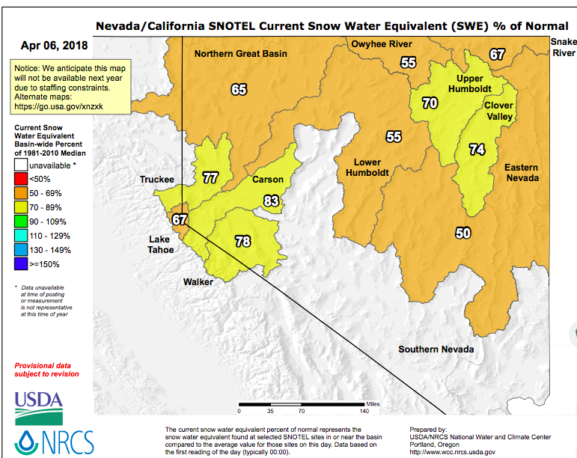
The Sierra Nevada’s snowpack, once a towering reservoir of frozen precipitation, now stands at a mere 17% of its historical average—a stark emblem of a shifting climate. Nevada’s winter of discontent was not merely a fluke but a convergence of atmospheric caprices and long-term environmental degradation. To understand this anomaly, one must peer beyond the surface of fleeting weather patterns and into the intricate dance of climate systems that have conspired to unravel the mountain’s once-reliable winter bounty.
The Atmospheric Blockade: A High-Pressure Fortress
The culprit behind Nevada’s snow drought was an unyielding high-pressure system that parked itself over the western United States for months, deflecting storm tracks northward. This atmospheric blockade, a phenomenon meteorologists term a “ridiculously resilient ridge,” acted as an invisible wall, shunting moisture-laden Pacific systems into Canada and the Pacific Northwest while leaving the Sierra Nevada parched. Such persistent ridges have become increasingly common in recent decades, their frequency and intensity amplified by the warming of the Arctic—a feedback loop where melting ice weakens the jet stream, allowing these stagnant weather patterns to take hold.
Warming Temperatures: The Silent Thief of Snow
Even when storms did graze the Sierra Nevada, their gifts were often stolen before they could accumulate. Rising temperatures—now a relentless trend—transformed what should have been snow into rain, or worse, sleet that melted upon contact with the ground. The freezing level, once a predictable boundary around 8,000 feet, has crept upward by hundreds of feet, ensuring that only the highest peaks retain their winter mantle. This thermal erosion of snowpack is not merely a seasonal inconvenience; it is a harbinger of ecological disruption, from delayed runoff that starves rivers to the unraveling of alpine ecosystems adapted to a colder, snowier past.
Dust and Soot: The Darkening Veil Over the Snow
Beneath the atmospheric blockade, another insidious force was at work: the darkening of the snow itself. Windborne dust from the shrinking Great Basin and soot from distant wildfires settled onto the Sierra’s slopes, lowering the albedo—the reflectivity—of the snow. Instead of bouncing sunlight back into the atmosphere, the darkened snow absorbed heat, accelerating melt rates. This phenomenon, known as the “albedo effect,” creates a self-reinforcing cycle: less snow means more exposed ground, which warms further, beckoning yet more dust and soot to hasten the snow’s demise. The result is a snowpack that vanishes not just from lack of precipitation, but from the relentless assault of its own diminished purity.
The Long Shadow of Drought: A Decade of Deficit
Nevada’s snowpack collapse did not occur in isolation. It is the latest chapter in a decades-long drought that has sapped the region’s hydrological reserves. Groundwater depletion, reservoir drawdowns, and the creeping aridification of the Southwest have left the land parched and the mountains barer than they have been in centuries. The Sierra Nevada, once a bastion of snow accumulation, now finds itself in a precarious balance—where even a “normal” winter may no longer suffice to restore what has been lost. This hydrological drought is not merely a temporary dry spell but a structural shift, one that demands a reevaluation of how water is managed, stored, and shared in an era of scarcity.
The implications of this snowpack collapse extend far beyond Nevada’s borders. The Colorado River, already strained by overuse and declining flows, relies on the Sierra’s snowmelt to recharge its dwindling reservoirs. Cities from Los Angeles to Phoenix watch nervously as the snowpack—their frozen savings account—dwindles. The once-reliable rhythm of winter’s gift has been disrupted, and with it, the foundations of an entire regional economy. To confront this new reality, we must look beyond the immediate causes and address the deeper currents reshaping the West: a warming climate, a thirsty landscape, and the unrelenting pressure of human demand. The Sierra Nevada’s snowpack may never return to its former glory—but understanding its decline is the first step toward adapting to a future where water is no longer taken for granted.