
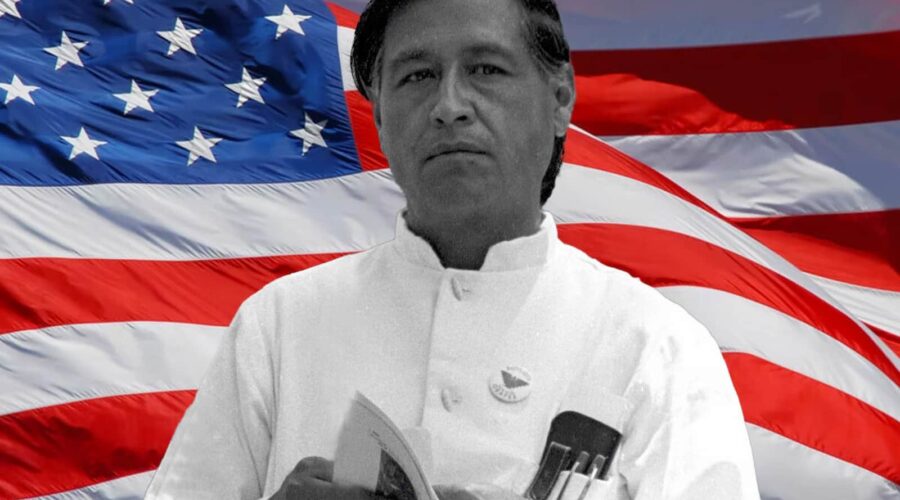
Cesar Chavez Day in Nevada: A Resource for Educators
In Nevada’s classrooms, where the echoes of labor history often fade beneath the hum of standardized tests, Cesar Chavez Day emerges as a vital bridge between past struggles and present civic engagement. Educators across the state grapple with a persistent challenge: how to transform a single commemorative day into a transformative learning experience. The solution lies not in passive observance, but in weaving Chavez’s legacy into Nevada’s unique social and economic fabric—a tapestry woven with immigrant narratives, agricultural roots, and the relentless pursuit of equity.
The Imperative of Contextualizing Chavez’s Legacy in Nevada’s Classrooms
Nevada’s history is indelibly marked by the toil of migrant workers, a demographic Chavez championed with unyielding fervor. Yet, many students remain unaware of the state’s pivotal role in the farmworker movement, particularly in regions like Fallon and Winnemucca, where labor strikes in the 1960s and 70s mirrored the struggles in California’s Central Valley. Educators must anchor Chavez’s story in Nevada’s geography, highlighting how the Silver State’s agricultural economy—from alfalfa fields to onion farms—depended on the very laborers Chavez organized. By framing his activism as a response to Nevada’s economic dependencies, teachers can cultivate a deeper understanding of how labor rights intersect with state identity.
Curriculum Design: Beyond the Myth of the Heroic Figure
A common pitfall in teaching Chavez’s legacy is the reduction of his life to a sanitized narrative of moral triumph. To counter this, educators should adopt a critical labor studies approach, dissecting the complexities of his strategies—from the grape boycott’s economic ripple effects to the internal debates within the United Farm Workers (UFW) over tactics and leadership. Nevada’s proximity to California’s agricultural hubs offers a natural laboratory for case studies. For instance, students can analyze how Nevada’s 1971 farm labor laws, influenced by UFW pressure, set precedents for worker protections nationwide. This method transforms Chavez from a distant icon into a figure whose actions reverberated in Nevada’s legislative halls.
Engaging Students Through Nevada’s Living Labor History
Fieldwork and oral histories can anchor Chavez’s legacy in tangible experiences. Nevada’s Nevada State Museum in Carson City, for example, houses artifacts from the state’s labor disputes, while the Northern Nevada Children’s Museum in Reno occasionally features exhibits on migrant family life. Educators might collaborate with local historians to organize walking tours of Reno’s Westside, where immigrant communities once congregated, or invite descendants of Nevada farmworkers to share their families’ stories. These immersive methods combat the abstraction of textbook lessons, allowing students to perceive Chavez’s fight as an ongoing dialogue with Nevada’s past and present.
Addressing Controversies: The Uncomfortable Truths of Labor Activism
No discussion of Chavez’s legacy is complete without confronting the controversies that shadowed his movement. In Nevada, where agricultural interests wielded significant political power, UFW campaigns faced fierce opposition, including arrests and violent crackdowns. Educators should facilitate discussions on the ethical dilemmas of labor activism—such as the tension between nonviolent resistance and militant tactics, or the exclusionary practices within the UFW that marginalized certain ethnic groups. By presenting these complexities, teachers can foster critical thinking, encouraging students to weigh the moral ambiguities of social change rather than accepting simplistic narratives of heroism.
Civic Action: Turning Lessons into Lifelong Advocacy
The ultimate goal of teaching Chavez’s legacy is to inspire students to see themselves as agents of change. Nevada’s classrooms can serve as incubators for civic projects that honor his spirit, such as advocating for fair wages in local service industries or partnering with organizations like Make the Road Nevada to address modern labor injustices. Educators might challenge students to research Nevada’s current minimum wage disparities or the conditions of workers in the state’s booming hospitality sector. By connecting Chavez’s era to contemporary issues, students learn that the fight for equity is not a relic of history but an evolving responsibility.
The resonance of Cesar Chavez’s work in Nevada lies not in its antiquity, but in its enduring relevance. As educators guide students through the state’s labor history, they illuminate a truth often obscured: that progress is not a linear march, but a series of hard-won battles fought in fields, courtrooms, and classrooms alike. In doing so, they ensure that Chavez’s legacy endures not as a distant monument, but as a living testament to the power of collective action.