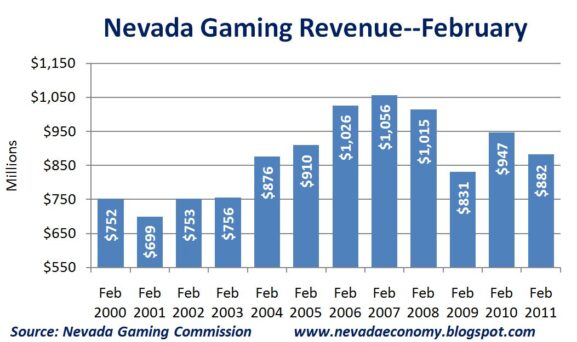

Tourism Downturn Playbook: How Nevada Casinos Handle 6.6% Revenue Loss
In an era where the neon glow of Las Vegas no longer casts an unshakable spell, Nevada’s casinos are confronting a sobering reality: a 6.6% revenue contraction that has sent ripples through the state’s economic undercurrents. This downturn isn’t merely a blip on the radar—it’s a seismic shift, one that demands more than just a reactive playbook. It calls for a strategic metamorphosis, a recalibration of expectations, and an unflinching examination of what it means to thrive in an industry that thrives on thrill. The question isn’t whether the casinos can rebound, but how they will redefine their future in a landscape where tradition no longer guarantees triumph.
The Anatomy of a Downturn: Dissecting the 6.6% Revenue Erosion
The numbers don’t lie, but they also don’t tell the full story. A 6.6% dip in revenue isn’t just a financial setback; it’s a symptom of deeper, systemic changes. Consumer behavior has shifted, with discretionary spending increasingly diverted toward experiences that promise immediacy and personalization over the allure of chance. Meanwhile, global economic headwinds—rising inflation, geopolitical tensions, and the lingering specter of post-pandemic fatigue—have eroded the once-unassailable confidence of high-rollers and casual gamblers alike. Casinos, long accustomed to operating as self-contained ecosystems, now find themselves at the mercy of broader market forces. The challenge isn’t just to stem the bleeding but to diagnose the wound with precision. Are these losses cyclical, a temporary lull in an otherwise unbroken streak of prosperity? Or do they signal a more permanent recalibration of Nevada’s economic identity?
Beyond the Slot Machines: Diversification as the New Blackjack
For decades, Nevada’s casinos thrived on a simple formula: lure visitors with the promise of fortune, keep them entertained with opulence, and let the house always win. But in a world where experiences are currency, diversification isn’t just a strategy—it’s a survival tactic. The most forward-thinking operators are pivoting toward hybrid models that blend gaming with non-gaming attractions. Think immersive entertainment complexes where the thrill of the casino floor is just one thread in a larger tapestry of dining, retail, and live performances. Others are doubling down on loyalty programs that transform one-time visitors into lifelong patrons, leveraging data analytics to tailor experiences with surgical precision. The message is clear: the future belongs to those who can weave gaming into a broader narrative of leisure, rather than relying on it as the sole protagonist.
The High-Stakes Game of Customer Retention: Loyalty in the Age of Distraction
Acquiring new customers is expensive. Retaining them is an art form. In an industry where the competition is no longer just down the Strip but across the digital divide, casinos are deploying innovative tactics to keep patrons engaged. Personalized rewards, once a novelty, are now table stakes. The cutting edge? AI-driven concierge services that anticipate a guest’s desires before they even articulate them. Imagine a casino that knows you prefer a quiet corner table for blackjack over the cacophony of the main floor, or one that suggests a spa visit after a night of high-stakes play. These aren’t futuristic fantasies; they’re the new battleground for customer loyalty. The casinos that master this game won’t just weather the downturn—they’ll redefine it.
Tech as the Dealer’s Ace: Innovation in an Analog World
Nevada’s casinos have always been temples of tradition, but the most resilient ones are embracing technology as their secret weapon. Mobile apps that streamline check-ins, cashless gaming systems that eliminate friction, and even blockchain-based loyalty tokens are transforming the guest experience. The goal isn’t to replace the tactile thrill of a roulette wheel but to augment it with seamless, frictionless interactions that cater to a generation raised on instant gratification. Even the physical space is evolving, with casinos experimenting with augmented reality to create hybrid gaming environments where the digital and the tangible coexist. The message is clear: innovation isn’t the enemy of tradition—it’s the force that will ensure its survival.
The Human Element: Why Empathy is the Ultimate High-Roller Perk
Amidst the algorithms and data points, it’s easy to forget that casinos are, at their core, people-driven enterprises. The most successful operators are those who recognize that empathy isn’t just a buzzword—it’s a competitive advantage. Staff training programs that emphasize emotional intelligence, surprise-and-delight initiatives that reward patrons in unexpected ways, and even wellness programs that cater to the mental and physical well-being of employees are becoming standard. The casinos that thrive in this new era will be those that treat their guests not as transactions but as individuals with evolving needs and desires. After all, in a world where automation is king, the human touch is the ultimate luxury.
The road ahead for Nevada’s casinos is fraught with uncertainty, but it’s also paved with opportunity. The 6.6% revenue loss isn’t a death knell—it’s a wake-up call. The question isn’t whether the industry can recover, but how it will reinvent itself. The playbook is being rewritten, and those who embrace change with both strategy and soul will emerge not just unscathed, but stronger. The future of Nevada’s casinos isn’t a gamble. It’s a certainty.