Record Low Snowpack in Nevada Sparks Water Rationing Fears for Summer
The parched earth of Nevada, already accustomed to arid landscapes, now faces an even starker reality. The state’s snowpack, a critical reservoir of winter moisture, has plummeted to levels that threaten to unravel the delicate balance of water management. With summer’s relentless heat looming, the specter of water rationing has begun to haunt communities, farmers, and policymakers alike. This isn’t merely a seasonal anomaly; it’s a harbinger of a deeper, systemic shift in the region’s hydrological fortunes.
The Vanishing Snow: A Crisis in the Mountains
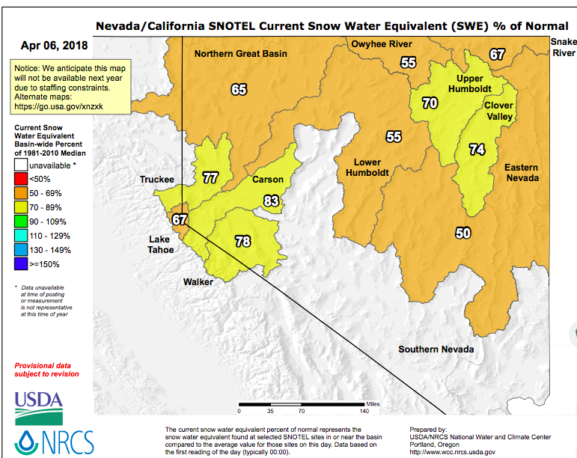
The Sierra Nevada, Nevada’s primary water tower, has long been a bastion of seasonal snowfall, storing precipitation in its frozen embrace until the thaw delivers life-giving runoff to reservoirs and aquifers. Yet this year, the snowpack languishes at historically low levels, a mere fraction of its median volume. The implications are dire. Snowmelt doesn’t just quench thirst; it recharges groundwater, sustains ecosystems, and ensures the viability of agricultural operations that underpin Nevada’s economy. Without it, the state’s water reserves dwindle like a receding tide, exposing vulnerabilities in a system that once seemed resilient.
Rationing Looms: The Human Cost of Scarcity
As reservoirs dwindle, the specter of rationing casts a long shadow over Nevada’s communities. Municipalities may soon face the unenviable task of curtailing water use, a measure that could disrupt daily life and strain social cohesion. Households accustomed to lush lawns and long showers may confront restrictions, while businesses reliant on water—from golf courses to breweries—could face crippling operational challenges. The psychological toll is equally profound; the specter of scarcity fosters anxiety, reshaping how residents perceive their relationship with water. Will this be a temporary hardship or the new normal?
Agriculture on the Brink: Fields of Dust and Drought
Nevada’s agricultural sector, a vital but often overlooked component of the state’s economy, stands on the precipice. Farmers, who depend on snowmelt for irrigation, now confront a stark reality: reduced yields, higher costs, and the grim possibility of fallowed fields. Alfalfa, a water-intensive crop, may see drastic declines in production, while livestock operations grapple with dwindling pastureland. The ripple effects extend beyond Nevada’s borders, as the state’s agricultural output—particularly hay and dairy—supports regional food systems. The drought doesn’t just threaten livelihoods; it imperils food security on a broader scale.
Policy in Peril: Can Nevada Adapt in Time?
The current crisis underscores the fragility of Nevada’s water policies, which were designed for a climate that no longer exists. Conservation measures, while necessary, are band-aid solutions in the face of a systemic imbalance. Policymakers must confront tough questions: Should groundwater pumping be further regulated? Can wastewater recycling and desalination play a larger role? The urgency of the moment demands bold, forward-thinking strategies, yet the path forward is fraught with political and economic hurdles. Time is not on Nevada’s side.
Climate Change: The Invisible Hand Behind the Crisis
While Nevada’s snowpack has fluctuated in the past, the current decline aligns with a broader pattern of climate change. Rising temperatures accelerate snowmelt, while shifting precipitation patterns reduce snowfall altogether. The state’s aridification is not a distant threat; it’s an unfolding reality. Scientists warn that without significant reductions in greenhouse gas emissions, Nevada’s water woes will intensify. The question is no longer whether climate change is a factor, but how severely it will reshape the state’s future. The choices made today will determine whether Nevada adapts or succumbs.
The road ahead is uncertain, but one thing is clear: Nevada’s water crisis is a microcosm of a global challenge. The state’s struggle to balance demand with dwindling supply offers a cautionary tale for regions grappling with similar pressures. Yet within this crisis lies an opportunity—to reimagine water management, to prioritize sustainability, and to forge a path toward resilience. The snow may be melting, but the time to act is now.