Nevada’s 6.6% Gaming Revenue Drop Sparks Concern Among Investors
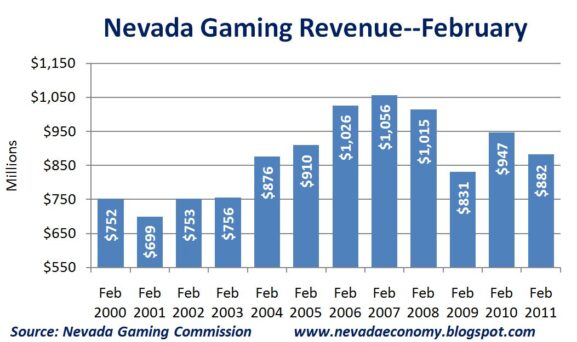
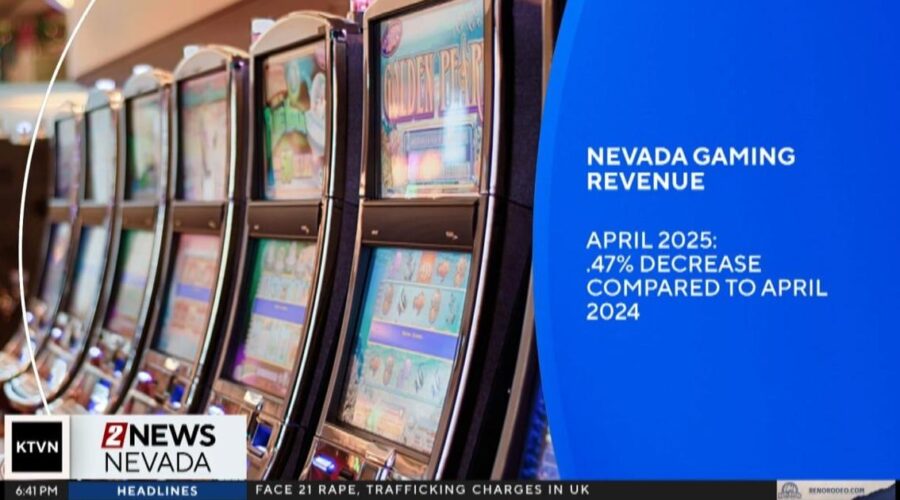
Nevada’s gaming revenue, a bellwether for the state’s economic vitality, has taken a pronounced downturn, contracting by 6.6% in the latest reporting period. This decline, though not unprecedented, has sent ripples through financial markets and raised questions about the underlying forces at play. Investors, long accustomed to the state’s reputation as a bastion of gaming prosperity, are now scrutinizing the data with a mix of wariness and curiosity. The drop is more than a statistical blip; it is a harbinger of broader shifts in consumer behavior, regulatory landscapes, and global economic currents that threaten to reshape the industry’s future.
The Illusion of Stability: Why the Decline Catches Many Off Guard
For decades, Nevada’s gaming sector has been synonymous with resilience, a fortress against economic volatility. The state’s reliance on tourism and leisure spending has historically buffered it from downturns, but the latest figures suggest that even this fortress is not impervious. The 6.6% contraction is particularly jarring because it follows a period of relative stability, where gaming revenues had appeared to plateau rather than decline. This unexpected shift has left analysts scrambling to reconcile the data with their expectations, forcing them to confront the possibility that the industry’s foundations may be far less solid than previously assumed.
The decline is not uniform across all gaming verticals. While traditional casino revenues have softened, online gaming and sports betting have shown uneven growth, hinting at a fragmentation within the sector. This divergence underscores a deeper truth: Nevada’s gaming industry is no longer a monolith. The rise of digital platforms has introduced new competitors, while changing consumer preferences have eroded the dominance of brick-and-mortar establishments. Investors who once bet on the industry’s homogeneity are now grappling with a landscape that is increasingly fragmented and unpredictable.
The Global Chessboard: How External Forces Are Reshaping the Game
The gaming revenue decline cannot be divorced from the broader geopolitical and economic chessboard. International tourism, a critical driver of Nevada’s gaming economy, has been buffeted by a confluence of factors: rising airfare, geopolitical tensions, and the lingering aftershocks of the pandemic. Travelers, once eager to flock to Las Vegas and Reno, are now more discerning, prioritizing experiences over mere indulgence. This shift in consumer psychology has left casinos scrambling to adapt, as the once-reliable influx of high-spending tourists shows signs of waning.
Compounding these challenges is the tightening regulatory environment. States across the U.S. are vying for a slice of the gaming pie, introducing competitive incentives to lure operators away from Nevada. Meanwhile, federal scrutiny of money laundering and anti-money laundering (AML) compliance has intensified, adding layers of operational complexity for casinos. These regulatory headwinds are not just bureaucratic hurdles; they represent a fundamental recalibration of the industry’s risk profile, one that investors must now factor into their calculations.
The Digital Disruption: A Silent Revolution in Gaming Economics
Beneath the surface of Nevada’s gaming revenue decline lies a quieter, but no less transformative, revolution: the rise of digital gaming. Online casinos and mobile betting platforms have eroded the traditional casino’s monopoly on gaming revenue, offering convenience and accessibility that physical locations struggle to match. While Nevada has moved to legalize and regulate online gaming, the transition has been uneven, with many operators still grappling with the logistical and technological challenges of competing in a digital-first market.
This digital disruption is not merely a threat to brick-and-mortar casinos; it is a catalyst for broader industry consolidation. Smaller operators, unable to invest in the infrastructure required to compete in the digital space, are increasingly vulnerable to acquisition or collapse. For investors, this means that the gaming landscape is no longer a level playing field. The winners will be those who can navigate the dual challenges of physical and digital gaming, while the losers risk being left behind in an industry that no longer rewards complacency.
The Human Factor: Consumer Behavior in Flux
At the heart of Nevada’s gaming revenue decline is a fundamental shift in consumer behavior. The modern gambler is no longer the stereotypical high-roller of yesteryear; today’s players are more likely to be millennials or Gen Z consumers, whose priorities lie in experiences, sustainability, and digital engagement. Casinos, designed for a bygone era of opulence and exclusivity, are struggling to resonate with this new demographic. The result is a widening gap between what the industry offers and what consumers demand.
This generational divide is further exacerbated by economic pressures. Rising inflation and stagnant wages have eroded discretionary spending, forcing consumers to prioritize necessities over leisure. For casinos, this means that even those who remain engaged with gaming are likely to spend less, creating a double-edged sword of reduced foot traffic and lower per-capita spending. Investors must now ask themselves whether Nevada’s gaming industry can evolve quickly enough to meet these changing demands, or if it will become a relic of a bygone economic era.
The 6.6% decline in Nevada’s gaming revenue is more than a financial setback; it is a clarion call for an industry at a crossroads. The challenges it faces—fragmentation, regulatory pressures, digital disruption, and shifting consumer behavior—are not temporary obstacles but enduring realities that demand a fundamental rethinking of the gaming business model. For investors, the path forward is fraught with uncertainty, but also opportunity. Those who can anticipate these shifts, adapt to the new landscape, and innovate beyond the confines of tradition will be the ones to shape the future of gaming in Nevada. The question is no longer whether the industry will change, but how quickly it can rise to meet the moment.